Lost-Wax Casting Around the World: Dhokra, Chola, Benin and Greek Bronzes
TL;DR: Lost-wax casting means shaping a wax model, covering it in clay, melting the wax out and pouring metal into the space. It is used by Dhokra artisans in central and eastern India, by Chola-tradition bronze makers in Tamil Nadu, by the royal brass casters of Benin in present-day Nigeria and by ancient Greek bronze workers. Each tradition has its own tools, patrons and history, and museums describe them separately rather than as copies of one another.
In this article
The method in plain words
A small bronze figure of a standing girl was dug out of the ruins of Mohenjo-daro, in today’s Pakistan. Writers on Indian metalwork often point to this figure, as an early sign that lost-wax casting was known in the Indus Valley. It is a useful place to start, though it is also a reminder to be careful: one source calls it the earliest known evidence, and another simply links it to Dhokra by technique, so it is best read as a widely repeated connection and not proof of a direct line to today’s craftspeople.
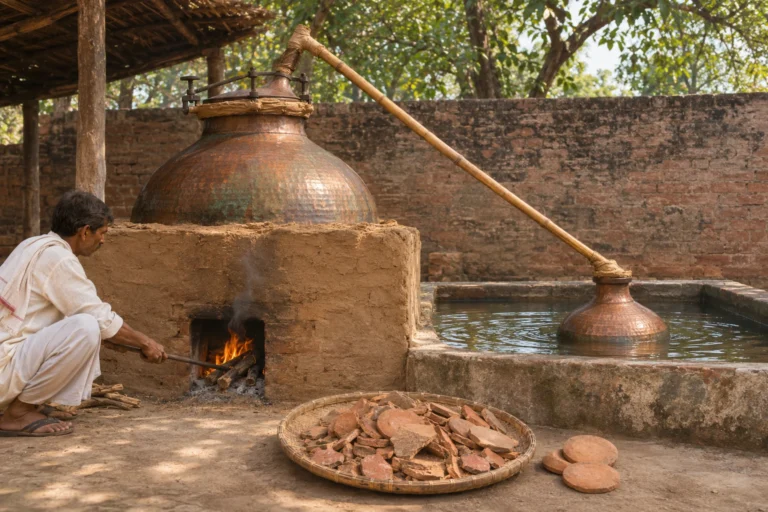
The steps are the same everywhere in outline. The Metropolitan Museum of Art describes them for Benin: a wax model is coated with fine clay and then coarser clay to form a mould, heat melts the wax out, molten metal is poured in and the mould is broken away. The wax is lost, so each mould is used once. The differences lie in what happens around that core idea: the shape of the clay, the kind of metal, who orders the work, and what the finished object is for.
Dhokra: wax threads and a clay core
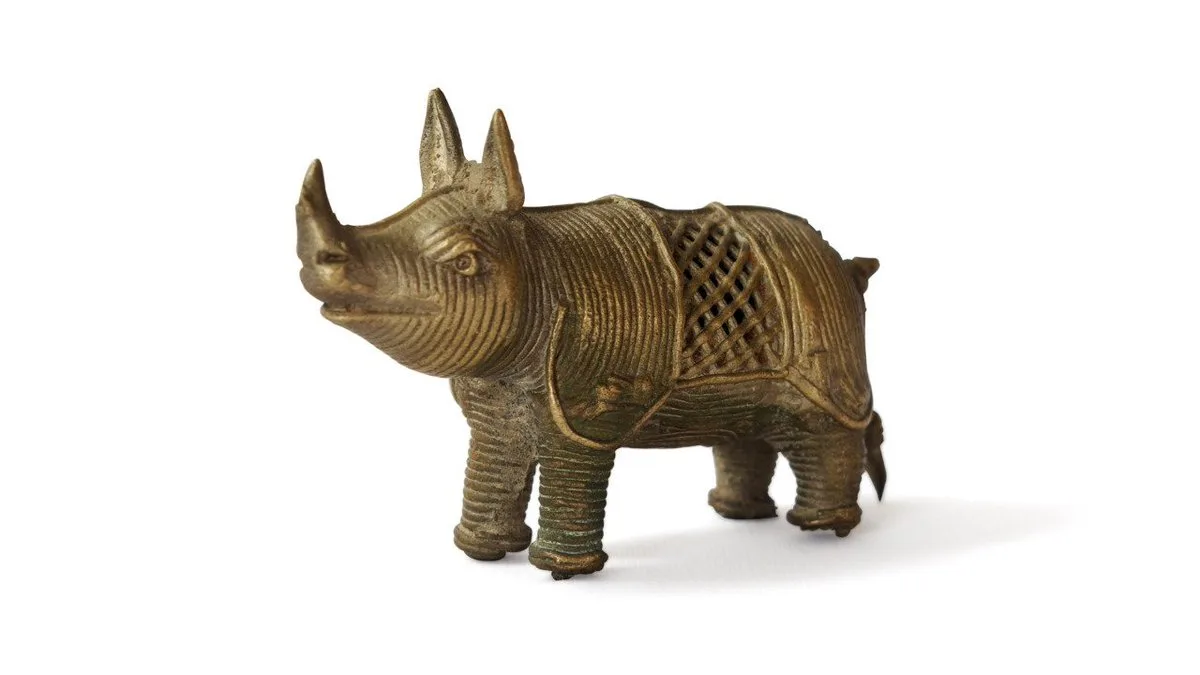
Dhokra, also spelled Dokra, is a metal-casting craft practised in parts of Chhattisgarh, Odisha, West Bengal, Jharkhand, Madhya Pradesh and Telangana. A paper from an Indian university describes the central and eastern method as hollow casting: a clay core is shaped, coated with a thin layer of wax, and then wax is pressed into thin threads and coiled over it to build the design. Layers of clay go on top, the mould is heated to drain the wax, and molten brass, often from scrap, is poured in. The same paper notes that some southern workshops use solid wax, and that many artisans combine both methods.
The craft body AIACA and the CSJM University paper both stress that the clay mould is broken after casting, so every piece is one of a kind. AIACA says GI (Geographical Indication) recognition covers Dhokra from Bastar, Adilabad and West Bengal. The origin of the word Dhokra is unclear: the university paper says there is no authentic evidence for it and mentions a popular legend linking it to a group of metalworkers in Bastar.
Chola bronzes: processions and Swamimalai
Chola bronzes are the temple images made in Tamil Nadu under the Chola dynasty, which the Tamil Nadu Tourism site places between the 9th and 13th centuries. The Victoria and Albert Museum in London holds a Shiva Nataraja, Shiva as Lord of the Dance, dated to the 12th century. Its record states that it was made by the lost-wax (cire perdue) method, from a copper alloy with lead and tin, and that holes in its lotus base show it was carried in processions.
The craft continues in Swamimalai, near Kumbakonam in Thanjavur district. Tamil Nadu Tourism says the work follows the rules of the Shilpa Shastra, the traditional texts on image-making, and that the icons carry a GI tag. It adds that more than 2,000 craftsmen, called Sthapathis, make temple and household icons there. The method is the same in outline as elsewhere: a wax model, clay coats, melting out the wax, pouring the metal, then filing and finishing by hand.
The Benin bronzes: royal brass and a painful history
The Benin bronzes come from the Kingdom of Benin, in what is now Edo State, Nigeria, and are not related to the modern country of Benin. Britannica says the term covers thousands of works, mostly of brass, made largely between the 15th and 19th centuries by royal guilds, with the brass casters guild ranked highest. The oba, the king, commissioned works such as ancestral altar heads and palace plaques using the lost-wax method. The Met adds that Benin sculptures often keep reddish clay from the mould, whose exact purpose is unclear, and that brass figures were kept polished because their shine carried royal and ritual meaning.
In 1897, British forces invaded Benin City. Britannica describes it as a punitive expedition launched after a British party led by a man named Phillips was ambushed; the British Museum says the palace, storerooms and compounds were looted of brass, ivory and wood objects, some sold on the coast and many taken to Britain. The British Museum states that more than 900 plaques are known in collections worldwide today. These are facts of the record; how museums and communities should respond is still a matter of discussion.
Return has begun. In August 2022 the Staatliche Museen zu Berlin transferred ownership of all the Benin bronzes in its Ethnologisches Museum to Nigeria, and a handover ceremony took place on 20 December 2022. Berlin says about a third of the objects will stay on loan in the Humboldt Forum at first, for ten years. Britannica notes that, by one scholar’s count, only nine institutions in Nigeria held Benin objects, compared with dozens in the UK and the US, and that the British Museum still holds the largest collection.
Greek bronzes: a later shift to lost wax
According to the Met, early Greek bronze statues were not cast but hammered from sheets of metal and riveted together, and lost-wax casting became the main technique from about 500 to 480 BC. The Met describes three forms: solid casting for very small figures, a hollow direct process where wax is built over a clay core, and a hollow indirect process where a mould is taken from a master model. The indirect method kept the master model, allowed recasting and casting in pieces, and was used for most large Greek and Roman bronzes.
Few of these statues survived, because bronze was often melted down for reuse; the Met adds that Roman marble copies are the main way we know many famous Greek works. A rare exception is the pair of Riace bronzes, found in August 1972 about eight metres underwater off Riace Marina in southern Italy. The Reggio Calabria museum, where they are shown, dates them to the 5th century BC and says they were made by lost-wax casting.
What the comparison does and does not show
Putting these four traditions side by side shows how one basic idea can serve very different worlds: village artisans making tribal-style figures, temple workshops serving festivals, royal guilds serving a king, and city workshops serving a public culture of statues. AIACA notes that lost-wax appears in several ancient regions, including Egypt, Mesopotamia, China, Greece, Mexico and Nigeria, but I found only one source for that list, so I do not suggest who learned from whom. The better reading is that people in many places worked out how to use wax and clay, and each community shaped the method to its own needs.
Related stories
- Enchanting World of Dhokra Art: India’s 4,000-Year-Old Metal Casting Marvel
- Lost Wax Metal Casting Technique
- Nataraja – Lord of Dance
- Geographical Indication (GI) tags
Frequently asked questions
What does lost-wax casting mean?
A wax model is covered in clay, the wax is melted and drained out, and molten metal fills the empty space. The mould is broken afterwards, which is why the wax is called lost.
Is Dhokra as old as the Indus Valley?
Several sources link Dhokra to the Mohenjo-daro figure from the Indus Valley, but that is a link by technique, not a proven unbroken line. It is safer to say the method is very old.
Are the Benin bronzes from the country called Benin?
No. They come from the historical Kingdom of Benin in present-day Edo State, Nigeria, which is different from the modern Republic of Benin.
Have any Benin bronzes been returned?
Yes. In 2022 Berlin’s state museums transferred ownership of their Benin collection to Nigeria and the first handover took place in December 2022. Other institutions hold large collections, including the British Museum.
Did the Greeks always use lost-wax casting?
No. According to the Met, earlier Greek statues were hammered from sheets, and lost-wax casting became the main method from about 500 to 480 BC.
Sources and further reading
- AIACA: Craft Name Dhokra (Dokra)
- Traditional Dhokra Artifacts Casting Technique (CSJM University)
- Victoria and Albert Museum: Shiva Nataraja, Lord of the Dance
- Tamil Nadu Tourism: Bronze idols and statues
- Britannica: Benin Bronzes
- The Metropolitan Museum of Art: Recovering a Benin bronze
- British Museum: Benin plaque, Oba on horseback
- The Metropolitan Museum of Art: The Technique of Bronze Statuary in Ancient Greece
- National Archaeological Museum of Reggio Calabria: Riace Bronzes
- Staatliche Museen zu Berlin: Return of the first ten Benin objects
Image credit: “A Dhokra figurine made by a Dharua tribe” by Government of Odisha, via Wikimedia Commons, licensed under CC BY 4.0.