Kumaon Folk Art
In short: Kumaon, the Himalayan hill region of Uttarakhand, has folk traditions in painting, sculpture, music, dance and drama. Aipan painting, Golu Devta images, songs like “Bedu Pako Baro Masa” and dances such as Chholiya and Jhora are among its best-known expressions. Most of it grew out of village festivals, family rituals and household crafts.
बेडु पाको बारो मासा, नरणा! काफल पाको चैत मेरी छैला
This is the opening of one of Kumaon’s best-loved folk songs, sung by Mohan Upreti, who became popular as the “Bedu Pako” singer. The song is still played at weddings and celebrations and is the marching song of the Kumaon Regiment.
Kumaon is the hill region of Uttarakhand, in the Himalayas. Its folk art, from Aipan floor painting to the Chholiya dance, has been passed down from generation to generation.
At a glance
Kumaon folk art in brief
- Region Kumaon, the hill region of Uttarakhand in the Himalayas
- Art forms Painting, sculpture, music, dance and drama
- Best-known painting Aipan, the ritual floor and wall painting made by women
- Aipan materials Red ochre mud (geru) base, white paste of ground rice, drawn with fingers
- Best-known deity images Golu Devta, worshipped across Kumaon
- Famous song Bedu Pako Baro Masa, the marching song of the Kumaon Regiment
Where does Kumaon’s folk art come from?
Kumaon is the hill region of Uttarakhand, and its folk art grew out of village life: festivals, family rituals, songs, dances and household crafts, passed on from one generation to the next. Nobody can give a single starting date for all of this, because most of it was made and performed by ordinary people and rarely written down.
The best-documented example is Aipan, the ritual floor and wall painting made by women. Government craft documentation says it began in Almora in the time of the Chand rulers and later spread across Uttarakhand. A cultural-heritage project on Google Arts & Culture tells the same story. Neither source gives a date, so it is safest to say that Aipan is an old, living tradition rather than to name a year.
Traditionally the floor is first coated with red ochre mud (geru), and the patterns are drawn with a white paste of ground rice, using the fingers. Aipan marks festivals, rituals and family occasions, and many believe it brings blessings and keeps harm away. That is a belief of the people who practise it. Today the same designs also appear on wood, cards, cloth and wall hangings.
For the other arts, such as folk songs, dances and temple carving, we have found no firm dates, so we describe them simply as long-standing local traditions.
What is Kumaoni folk art?
Kumaoni folk art takes five main forms: painting, sculpture, music, dance and drama. Each has its own style, themes and techniques.
Art forms
Five strands of Kumaoni folk art
- Painting Bold colours and detailed designs on themes of mythology, religion and everyday life. Aipan and Pahari painting are popular styles.
- Sculpture Mostly wood or stone, such as images of Golu Devta and the stone carvings of the Sun Temple at Katarmal.
- Music Folk songs such as Bajuband, Chhopati and Jhoda, with instruments like the dhol, damau and hurka.
- Dance Chholiya, Jhumelo, Jhoda, Chhapeli and Thali, usually performed on special occasions.
- Drama Performed by local artists on social issues, mythology and everyday life, with music and dance.
What are the paintings of Kumaon like?
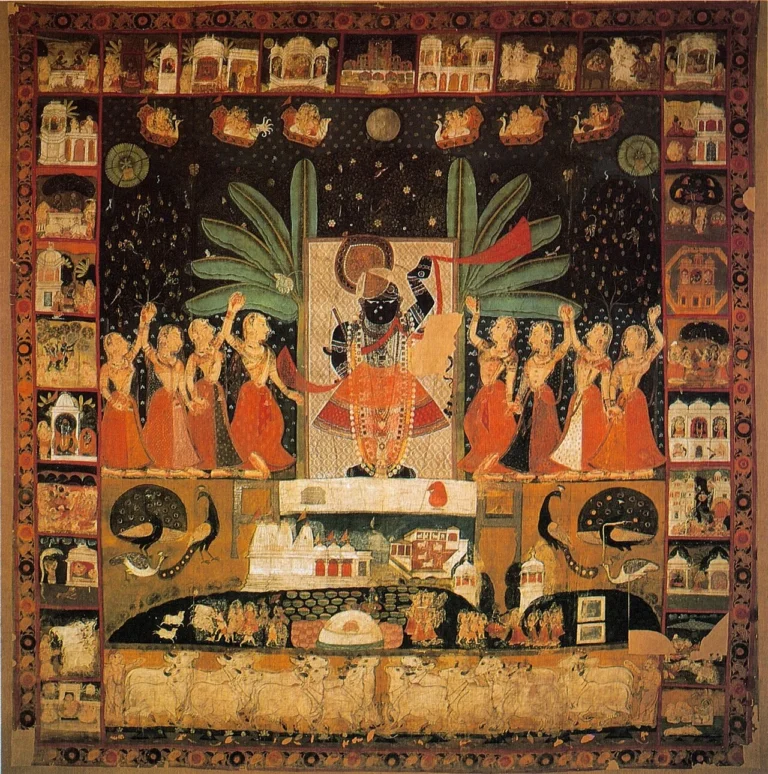
Kumaoni paintings use bold colours and detailed designs. They depict themes related to mythology, religion and everyday life. Aipan, the best-known folk art of Kumaon, and Pahari painting are among the popular styles.
What are the sculptures of Kumaon?
Kumaoni sculptures are mostly made of wood or stone, and many are finely carved. They depict gods and goddesses, animals and everyday life. Well-known examples include the images of Golu Devta, a deity worshipped across Kumaon, and the stone carvings of the Sun Temple at Katarmal.
What is the music of Kumaon?
Kumaoni folk songs such as Bajuband, Chhopati and Jhoda are sung at weddings, festivals and religious ceremonies and speak of love, nature and spirituality. Kumaoni music is known for instruments such as the dhol, damau and hurka.
What are the dances of Kumaon?
Well-known Kumaoni dances include Chholiya, Jhumelo, Jhoda, Chhapeli and Thali. They are usually performed on special occasions and show themes of nature, love, religion and spirituality, with colourful costumes and live music.
What is Kumaoni folk drama?
Kumaoni folk drama is performed by local artists and deals with social issues, mythology and everyday life. Performers use colourful costumes (and, in some traditions, masks), and the performances are usually accompanied by music and dance.
Frequently asked questions
Where is Kumaon?
Kumaon is a region in the Himalayas in Uttarakhand.
Where does Kumaon’s folk art come from?
Kumaon’s folk art grew from village rituals, festivals and daily life in the hills of Uttarakhand, and no single start date is known. For Aipan, the ritual floor painting, craft records say it began in Almora under the Chand rulers and later spread across the state. Exact dates are not recorded.
What art forms does Kumaoni folk art include?
It includes paintings, sculptures, music, dance and drama.
What is Aipan?
Aipan is the best-known folk painting of Kumaon, drawn in white rice paste on a red ochre base.
Which instruments are used in Kumaoni music?
The dhol, damau and hurka are among the instruments, and folk songs are sung at weddings, festivals and ceremonies.
Who is Mohan Upreti?
He is the singer best known for the Kumaoni folk song “Bedu Pako Baro Masa”, which is also the marching song of the Kumaon Regiment.
Sources and further reading
Uttarakhand Aipan, Development Commissioner (Handicrafts), Government of India.
Aipan: Ritualistic Folk Art of Kumaon, Project FUEL, Google Arts & Culture.
- Kumaon division, Wikipedia (in English)
- Mohan Upreti, Wikipedia (in English)
Related reading
- Dhokra Art: India’s 4,000-Year-Old Lost-Wax Metal Casting
- Unsung Art of India: 9 Folk and Tribal Painting Styles
- Bengali Patachitra: Scroll Painting and Song of West Bengal
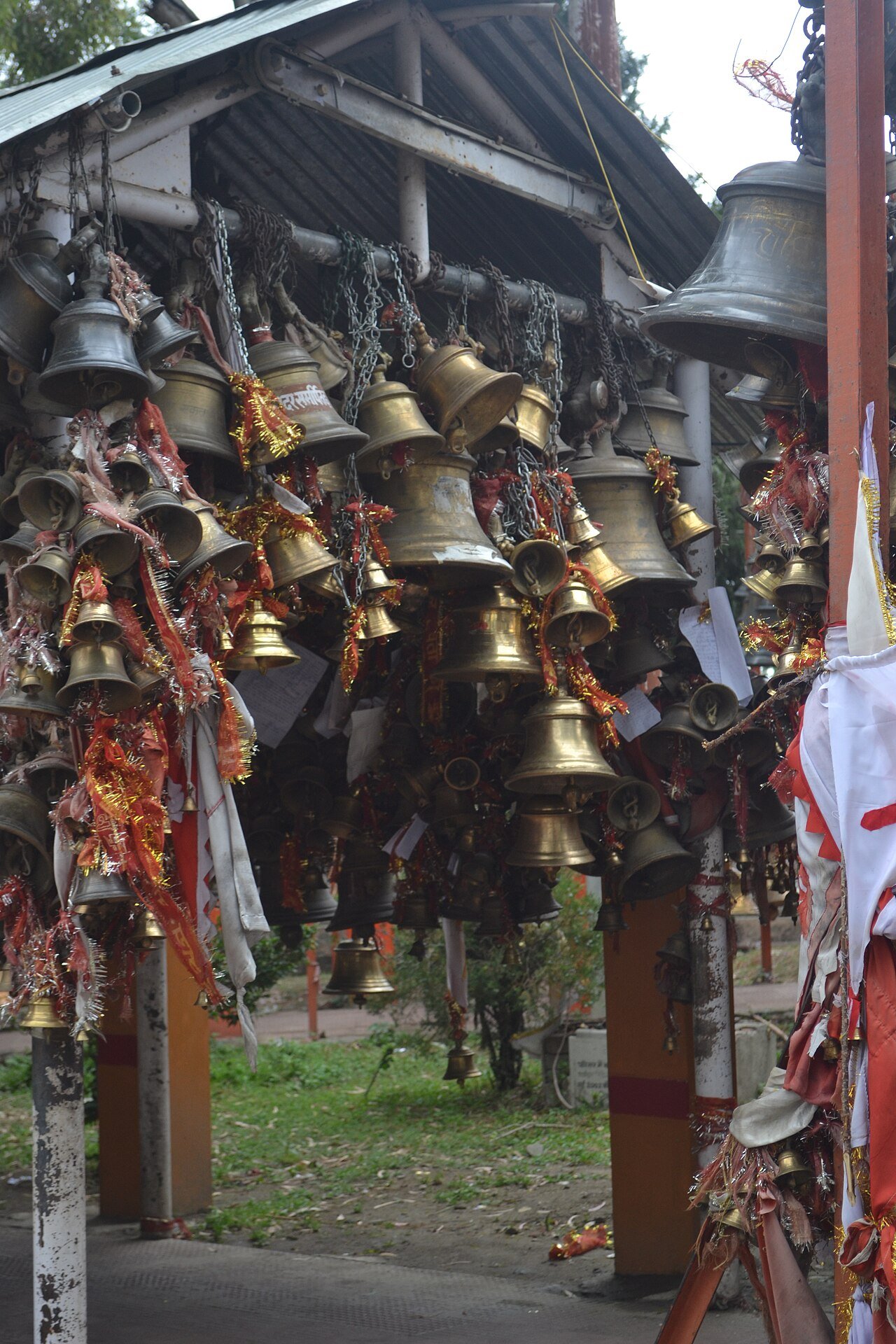
Image credit: “Entrance of Chitai Golu Devta Temple” by Kanishkapant98, via Wikimedia Commons, licensed under CC BY-SA 4.0.