Pokharan Pottery: Capturing the Soul of the Desert.
TL;DR: Pokhran pottery is a traditional craft of Pokhran, a town near Jaisalmer in Rajasthan’s Thar Desert. Potters shape a fine, pinkish clay by hand, sun-dry it and fire it in a kiln to make tough pots, vases, diyas and decorative pieces, often with geometric patterns. The craft has a GI tag and is supported by organisations that train artisans and find markets for their work.
In the midst of the vast Thar Desert in Rajasthan, the town of Pokhran is known for its historical fort and its nuclear test site. But another part of its cultural heritage is the age-old art of pottery-making, passed down through generations.
Pokhran pottery captures the essence of the desert and reflects the region’s cultural diversity and artistic skill. It has also received a Geographical Indication (GI) tag.
What is the history of Pokhran pottery?
Pokhran pottery is an old craft with roots going back centuries, and it has long been part of the local economy. Over time the art form has adapted, taking in different influences and techniques while keeping its core identity and charm.
How is Pokhran pottery made?
Making Pokhran pottery is a labour-intensive process that starts with the careful selection and preparation of clay. Unlike the deep red clay used elsewhere, Pokhran potters use a pinkish, almost white clay, which is collected locally, beaten, ground and sieved to a fine texture.
- Shaping: The potter shapes the clay by hand, using a traditional wheel and simple tools to carve patterns and designs.
- Drying: The pieces are left to dry in the sun for several days.
- Firing: They are then fired in a kiln at high temperatures, which makes them strong and durable.
What are the designs and products of Pokhran pottery?
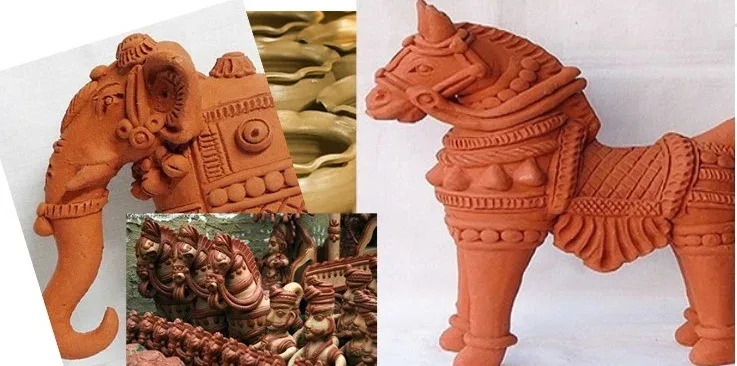
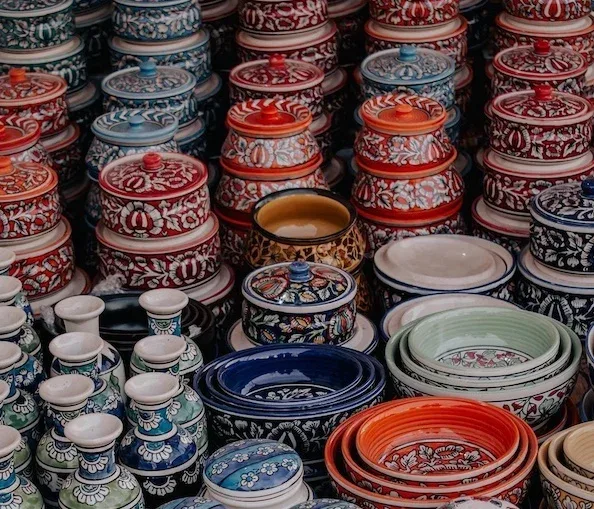
Pokhran pottery is recognised for designs and motifs inspired by the culture and traditions of Rajasthan. They often include geometric patterns, floral motifs and carved or incised decoration.
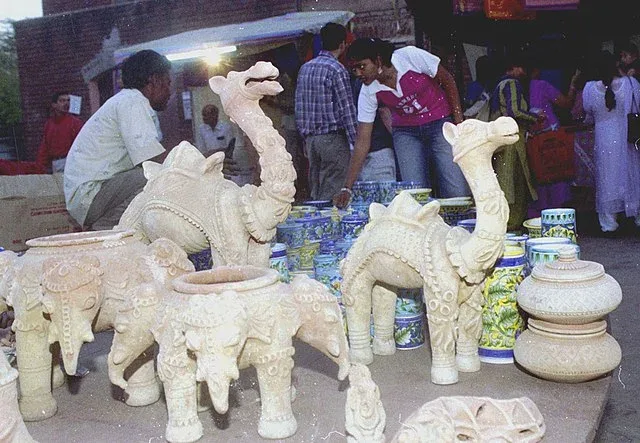
The range of products includes pots, vases, bowls, plates, surahis (pitchers), jars, and decorative items such as diyas (oil lamps) and animal figurines. Each piece reflects the skill, creativity and dedication of the potter.
Why does Pokhran pottery need support today?
In a world driven by mass production and global markets, Pokhran pottery is striving to stay relevant and economically viable. Organisations and NGOs are stepping up to promote the art form, provide training and support to artisans, and help build a market for their creations.
Visitors to Rajasthan can help preserve this art by buying genuine Pokhran pottery and spreading awareness of its cultural importance.
Sources and further reading
Image credit: Wikimedia Commons, Government of India, licensed under the Government Open Data License – India (GODL).
Frequently asked questions
Where is Pokhran pottery made?
In Pokhran, a town in the Thar Desert of Rajasthan, near Jaisalmer.
What clay is used for Pokhran pottery?
A pinkish, almost white clay that is beaten, ground and sieved to a fine texture, unlike the deep red clay used in many other places.
How is Pokhran pottery made?
The clay is shaped by hand, dried in the sun for several days and then fired in a kiln at high temperatures.
What products are made in Pokhran pottery?
Pots, vases, bowls, plates, surahis, jars, diyas (oil lamps) and animal figurines.
Does Pokhran pottery have a GI tag?
Yes, Pokhran pottery has a Geographical Indication (GI) tag, which recognises it as a craft of the region.