Dhokra Art: India’s 4,000-Year-Old Lost-Wax Metal Casting
In short: Dhokra is India’s age-old lost-wax method of casting metal, described by government sources as more than 4,000 years old. Artisans from tribal communities of eastern and central India shape a clay core, cover it in a wax mix of beeswax and resin, encase it in clay, melt the wax out and pour in molten brass. Every piece is one of a kind. You can help keep the craft alive by buying directly from artisans and supporting revival groups.
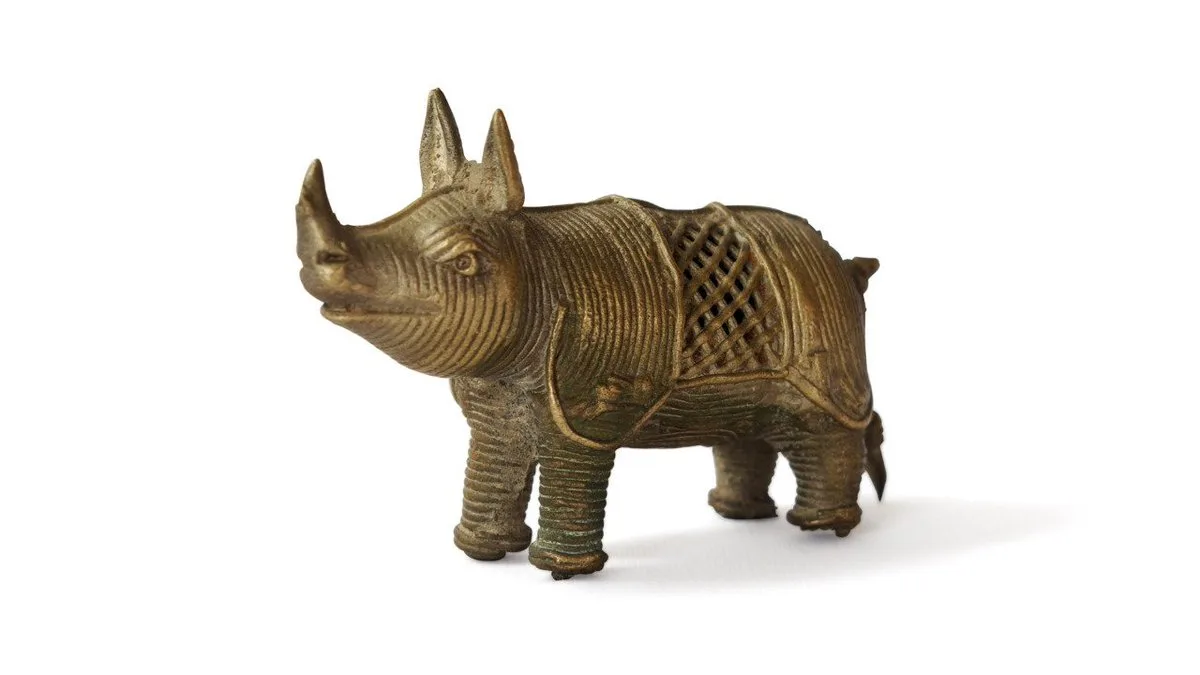
Dhokra is a way of casting brass and bell metal by the lost-wax method, and its history stretches back more than 4,000 years; one of the earliest known lost-wax objects is the famous “dancing girl” of Mohenjo-daro. The craft is practised by tribal metalsmiths across Odisha, West Bengal, Jharkhand and Chhattisgarh, and in other parts of India. Using the lost-wax casting technique, they create metal sculptures in which every piece carries a story of heritage and skill.
Where does Dhokra art come from?
Dhokra (also spelled Dokra) is a way of casting metal figures by the lost-wax method. A model is shaped in wax and covered in clay. The clay is fired so the wax melts away, and molten brass or bell metal is poured into the hollow. Today it is a living craft in West Bengal, Odisha, Jharkhand and Chhattisgarh, including Bastar, and also in Adilabad in Telangana.
How old is it? Government sources describe the tradition as more than 4,000 years old. That is a broad estimate, not an exact date. The famous bronze “dancing girl” of Mohenjo-daro, from the Indus civilization of roughly 2500 to 1700 BCE, is often cited as an early example of lost-wax casting in India. How directly that ancient work connects to today’s Dhokra has not been established, so it is safest to say the craft belongs to a very long Indian tradition of lost-wax casting.
The word “Dhokra” itself is a later, general label. Researchers note that artisans in the field often name their work and their communities differently; in Bastar, for example, the metalworkers are known as Ghadwa. Because this is a village craft passed down by families, exact dates and the routes by which it spread remain uncertain.
How is Dhokra art made?
Here’s how a Dhokra sculpture comes to life:
- Shaping the core: The artisan first makes a clay core roughly in the shape of the final piece, whether a deity, an animal or a scene from everyday life.
- Modelling in wax: The core is covered with a layer of wax, traditionally a mix of beeswax, tree resin and nut oil, which is carved and decorated with fine details. Whatever is shaped in wax will appear in metal.
- Building the mould: The wax model is covered in layers of clay and dried, leaving small channels. When the mould is heated, the wax melts and drains away, leaving a hollow in the exact shape of the wax design. That’s why it’s called “lost-wax” casting.
- Pouring the metal: Molten metal, usually brass and often made from brass scrap, is poured into the hollow. Once it cools, the clay mould is broken away to reveal the sculpture.
- Finishing: The piece is filed and polished to bring out its shine and highlight the details. Because the mould is broken each time, no two Dhokra pieces are ever exactly alike.
Why does Dhokra art matter?
The casting method has been passed down through generations of the same communities. Each piece reflects their beliefs, traditions and sense of design.
Is Dhokra art at risk?
With mass-produced goods everywhere and fewer young artisans taking up the craft, Dhokra, like many traditional art forms, faces an uncertain future.
How can you help keep Dhokra alive?
Buying Dhokra directly from artisans helps keep the craft going. Here’s how you can help:
- Buy from the makers: look for chances to buy directly from artisans, or from stores that promote traditional Indian handicrafts.
- Spread the word: share Dhokra with friends and family. The more people appreciate it, the better its chances of survival.
- Support revival efforts: look for organisations working to revive Dhokra and consider supporting them.
Where can you see Dhokra art?
- Museums with Indian craft and tribal art collections.
- Online exhibitions and galleries that feature Dhokra.
- The craft villages of eastern and central India, such as those in Odisha, West Bengal and Chhattisgarh, where you can watch artisans at work and meet them.
Each Dhokra piece is cast in its own mould, so no two are the same, and buying them is the simplest way to keep the craft in use.
GI tag record
| GI name | State | Filed | Certificate date | Valid until | Registry |
|---|---|---|---|---|---|
| Bastar Dhokra | Chhattisgarh | 12 March 2007 | 22 April 2008 | 11 March 2027 | App. 83 |
| Adilabad Dokra | Telangana | 6 March 2015 | 18 May 2018 | 5 March 2035 | App. 521 |
| Bengal Dokra | West Bengal | 17 August 2016 | 28 March 2018 | 16 August 2036 | App. 563 |
Dates are from the official GI Registry record, read on 21 November 2026. See all crafts in our GI tag list.
Frequently asked questions
What is Dhokra art?
Dhokra is a traditional Indian way of making metal sculptures by lost-wax casting. Government sources describe it as more than 4,000 years old, and it is traditionally practised by artisan communities of eastern and central India.
Where does Dhokra art come from?
Dhokra art comes from a very long tradition of lost-wax metal casting practised by artisan communities in central and eastern India, including West Bengal, Odisha, Jharkhand and Chhattisgarh. Government sources call it more than 4,000 years old, though exact dates and early routes are uncertain.
Where is Dhokra art made?
Mainly in Odisha, West Bengal, Jharkhand and Chhattisgarh, with related traditions elsewhere in India, such as Adilabad in Telangana.
How is Dhokra made?
A clay core is covered with a wax mix that is carved with details, then encased in clay. Heating melts the wax out, molten brass is poured into the hollow, and the clay is broken away before the piece is polished.
Why is every Dhokra piece unique?
The clay mould has to be broken to release each casting, so it can’t be reused. That means no two pieces are exactly the same.
Does Dhokra have a GI tag?
Some regional styles do. For example, Adilabad Dokra from Telangana received a Geographical Indication (GI) tag in 2018.
Sources and further reading
Metal-work across the States, Sahapedia.
Geographical Indications of India marketed by Tribes India, Press Information Bureau, Government of India.
Handicraft of India: Tribal Crafts, Development Commissioner (Handicrafts), Ministry of Textiles.
From 4,000-Year-Old Dhokra to Tribal Heritage, Press Information Bureau, Government of India.
Dhokra, Wikipedia.
Related reading
- Kumaon Folk Art
- Lost-Wax Casting Around the World: Dhokra, Chola, Benin and Greek Bronzes
- Art as an Investment: Benefits, Risks and How to Start
Image credit: “A Dhokra figurine made by a Dharua tribe” by Government of Odisha, via Wikimedia Commons, licensed under CC BY 4.0.