Bone Carving in India: History, Process and Craft Centres
In short: Bone carving in India turns animal bones into decorative and functional objects, a craft with roots in ancient bone-working that grew under the Nawabs of Awadh. Today artisans in places such as Lucknow and Sambhal work mostly with bone from animals that have died, as ivory use is restricted.
In this article
- What is the history of bone carving in India?
- What materials and techniques do bone carvers use?
- Where is bone carving practised in India?
- How has bone carving adapted to modern times?
- Why is bone carving culturally significant?
- What challenges and opportunities does the craft face?
- Conclusion
- Frequently asked questions
- Sources and further reading
Bone working in India is very old, with bone tools and combs found at Indus-period sites, and the carving craft grew under the Nawabs of Awadh. Today artisans in places such as Lucknow and Sambhal turn animal bones into decorative and functional objects, mostly using bone from animals that have died. This article explains how the craft developed, where it is practised now and what makes it special.
At a glance
Bone carving in brief
- Craft Shaping animal bones into decorative and functional objects
- Materials Traditionally buffalo and camel bones and antlers; ivory is now restricted
- Main centres Lucknow and Sambhal in Uttar Pradesh
- Tools Chisels, files and knives
- Made Jewellery, combs, handles, boxes, lamps and sculptures
- GI tag Sambhal bone craft, registered in 2024
What is the history of bone carving in India?
People have worked bone for as long as there have been tools, and India is no exception. Excavations at Indus-period sites have turned up bone tools at Harappa, and combs of bone and ivory from places such as Kalibangan and Banawali, dated to roughly 2600 to 1900 BCE. These were everyday objects, and we cannot draw a straight line from them to the craft you see today.
The better-documented story is more recent. Craft-heritage records describe Lucknow as a long-standing centre of ivory carving, with work made for the Nawabs of Awadh, including boxes, lamps and other decorative and practical pieces. Exactly when this tradition began is not firmly dated, so it is safest to say it grew over several generations.
In the late twentieth century India tightened its rules on the ivory trade, and carvers increasingly turned to camel and buffalo bone, which is gathered from animals that have died. Lucknow remains a well-known bone-carving centre, and Sambhal in Uttar Pradesh has its own bone craft, which received a Geographical Indication (GI) registration in 2024. Today the craft sits between old skill and new limits, with artisans adapting their designs to the materials they can legally and ethically use.
Ancient roots
The history of bone carving in India stretches back to ancient times. Excavations at Indus-period sites have found bone tools and bone or ivory combs.
Lucknow and the Nawabs of Awadh
Craft-heritage records describe Lucknow as a long-standing ivory-carving centre, with work made for the Nawabs of Awadh.
Timeline
How bone carving developed
- Roughly 2600 to 1900 BCE Bone tools at Harappa and bone and ivory combs from Kalibangan and Banawali; no straight line can be drawn to today’s craft.
- Era of the Nawabs of Awadh Lucknow became a long-standing carving centre; the start is not firmly dated, so the tradition grew over several generations.
- Late 20th century India tightened its rules on the ivory trade, and carvers turned increasingly to camel and buffalo bone.
- 2024 Sambhal bone craft received a Geographical Indication (GI) registration.
What materials and techniques do bone carvers use?
Materials
Indian bone carvers traditionally use buffalo and camel bones, as well as antlers. Ivory was once popular, but its use is now restricted because of conservation efforts. Today artisans focus on ethically sourced bones, mainly from animals that died naturally or as by-products of the meat industry.
Techniques
Artisans select suitable bones, clean them and prepare them for carving. Using traditional tools such as chisels, files and knives, they shape the bone into detailed designs. Finished pieces often have engraved or inlaid patterns, sometimes with stones and metals.
How it’s made
From raw bone to carved piece
- Select the bone Artisans choose suitable bones, mainly from animals that died naturally or as by-products of the meat industry.
- Clean and prepare The bones are cleaned and made ready for carving.
- Carve the design With chisels, files and knives, they shape the bone into fine patterns.
- Decorate Finished pieces often have engraved or inlaid patterns, sometimes with stones and metals.
Where is bone carving practised in India?
- Uttar Pradesh: the city of Sambhal is a renowned centre of bone and horn craft. Artisans make jewellery, decorative items and utility objects such as combs and handles.
- Uttar Pradesh: Lucknow is a long-standing carving centre, with work historically made for the Nawabs of Awadh.
How has bone carving adapted to modern times?
Contemporary bone carvers have adapted to changing tastes and market demands. They create both traditional and modern designs, blending old techniques with new styles, which keeps the craft relevant. With growing awareness of wildlife conservation, modern artisans use ethically sourced materials, which supports sustainability and appeals to a growing market for responsibly produced art.
Why is bone carving culturally significant?
- Religious and ritual objects: bone carvings often have spiritual significance and are used in religious rituals. Deities such as Krishna are sometimes depicted, symbolising devotion and artistry.
- Cultural heritage: the craft reflects India’s history and artistic traditions, with skills passed down through generations.
What challenges and opportunities does the craft face?
- Conservation laws: restrictions on ivory have affected artisans who worked with it, but they have also led to innovation with alternative materials and techniques.
- Market demand: there is a growing market for ethically produced and sustainably sourced bone carvings among domestic and international buyers.
- Skill development: organisations and government initiatives support skill development and give artisans platforms to show their work. Workshops and training programmes help young artisans learn the craft.
- Exhibitions and fairs: displays at exhibitions and fairs promote the craft and give artisans exposure to wider markets.
Conclusion
Bone carving is still practised in India, in centres such as Lucknow and Sambhal. Despite modern challenges, artisans are adapting to new materials and markets while keeping traditional techniques and styles.
Frequently asked questions
What is bone carving?
It is the art of shaping animal bones into decorative and functional objects such as jewellery, combs, handles and sculptures.
How old is bone carving in India?
Working bone is very old in India: bone tools and bone or ivory combs have been found at Indus-period sites from around 2600 to 1900 BCE. The decorative carving craft known today is better documented from the era of the Nawabs of Awadh, though its exact start date is not known.
Which materials do Indian bone carvers use?
Traditionally buffalo and camel bones and antlers. Ivory was once popular but is now restricted, and artisans today focus on ethically sourced bones.
Which places are known for bone carving?
Lucknow and Sambhal in Uttar Pradesh are the best documented centres.
What challenges does the craft face?
Restrictions on ivory have affected artisans, but they have also encouraged innovation, and a growing market for ethical products offers new opportunities.
Sources and further reading
Bone tools (Harappa), Harappa Archaeological Research Project (harappa.com).
Combs: From Ancient to Modern Times, Indian Culture Portal, Ministry of Culture, Government of India.
Camel Bone Carving of Uttar Pradesh, Global InCH.
Sambhal Bone Craft, GI Application No. 930, Geographical Indications Registry, Government of India.
- Bone carving – Wikipedia (in English)
- Bone Horn Craft of Sambhal – Indirare (in English)
Related reading
- Allagadda Stone Carving
- Krishna Art: The 16 Kalas and 13 Famous Artworks.
- Home decor ideas for your new beginnings
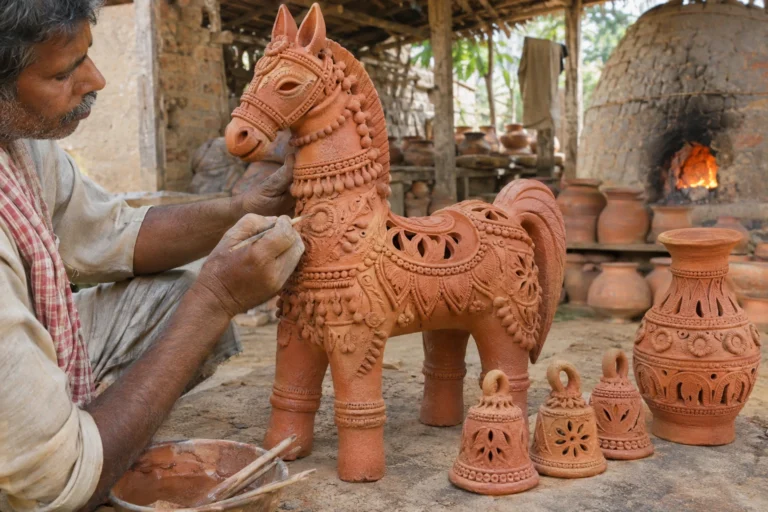
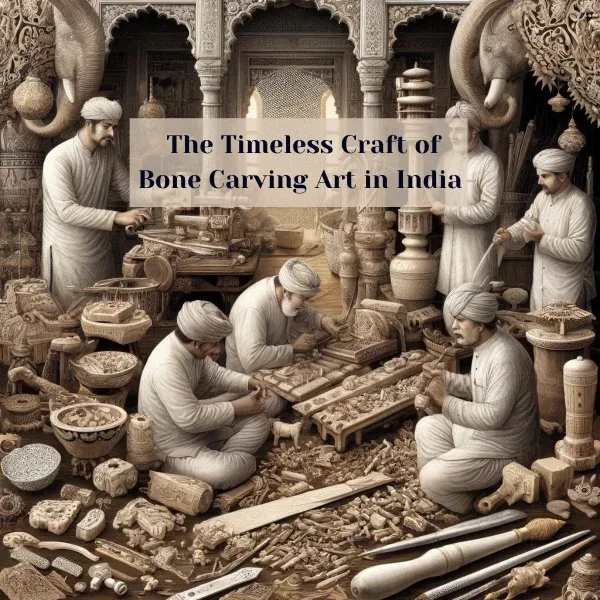
Image credit: AI-generated illustration created for Thigma Art, shown for representation; it is not a photograph of a real object.