Rich Heritage of Pichvai Paintings: A Journey Through Color, Devotion, and Tradition
TL;DR: Pichwai (also spelt Pichvai) paintings are richly detailed devotional artworks from Nathdwara in Rajasthan, made as backdrops for the deity Shrinathji, a form of Krishna. They are painted on cloth with fine brushwork, often with gold and silver, and show Krishna’s stories and festivals. The art is still practised today and is reaching new audiences.
Pichwai paintings, which originate from the town of Nathdwara in Rajasthan, India, are not just artworks. They embody devotion, culture and tradition. These intricate, vibrant paintings have been part of Indian art and religious practice for centuries, offering a glimpse into the rich world of Hindu mythology and spiritual belief.
This article looks at the history, meaning, techniques and legacy of Pichwai painting.
What is the history of Pichwai paintings?
The story of Pichwai paintings goes back to the 17th century, when the Shrinathji temple was established at Nathdwara (in 1672). Shrinathji is a form of Lord Krishna. As part of the temple rituals and festivals, elaborate cloth hangings, known as pichwais, were created to adorn the sanctum and depict various episodes from the life of Shrinathji.
These early pichwais were not only decoration. They also helped the temple’s followers in devotion and meditation.
What do Pichwai paintings symbolise?
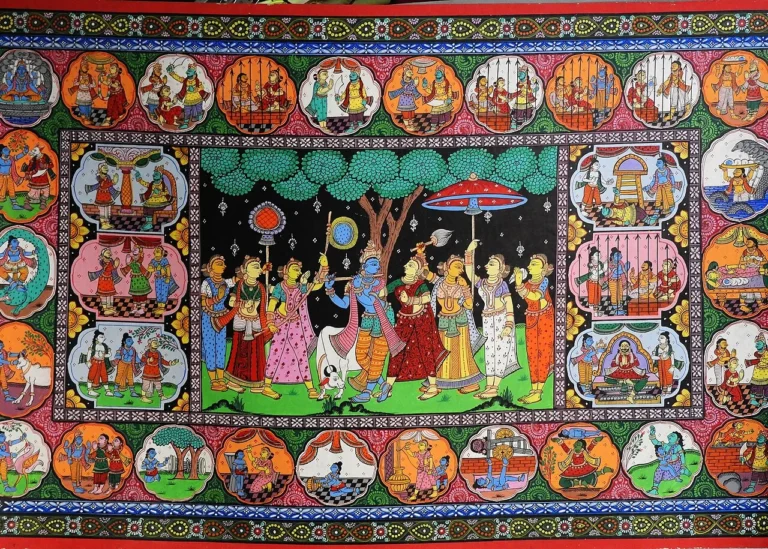
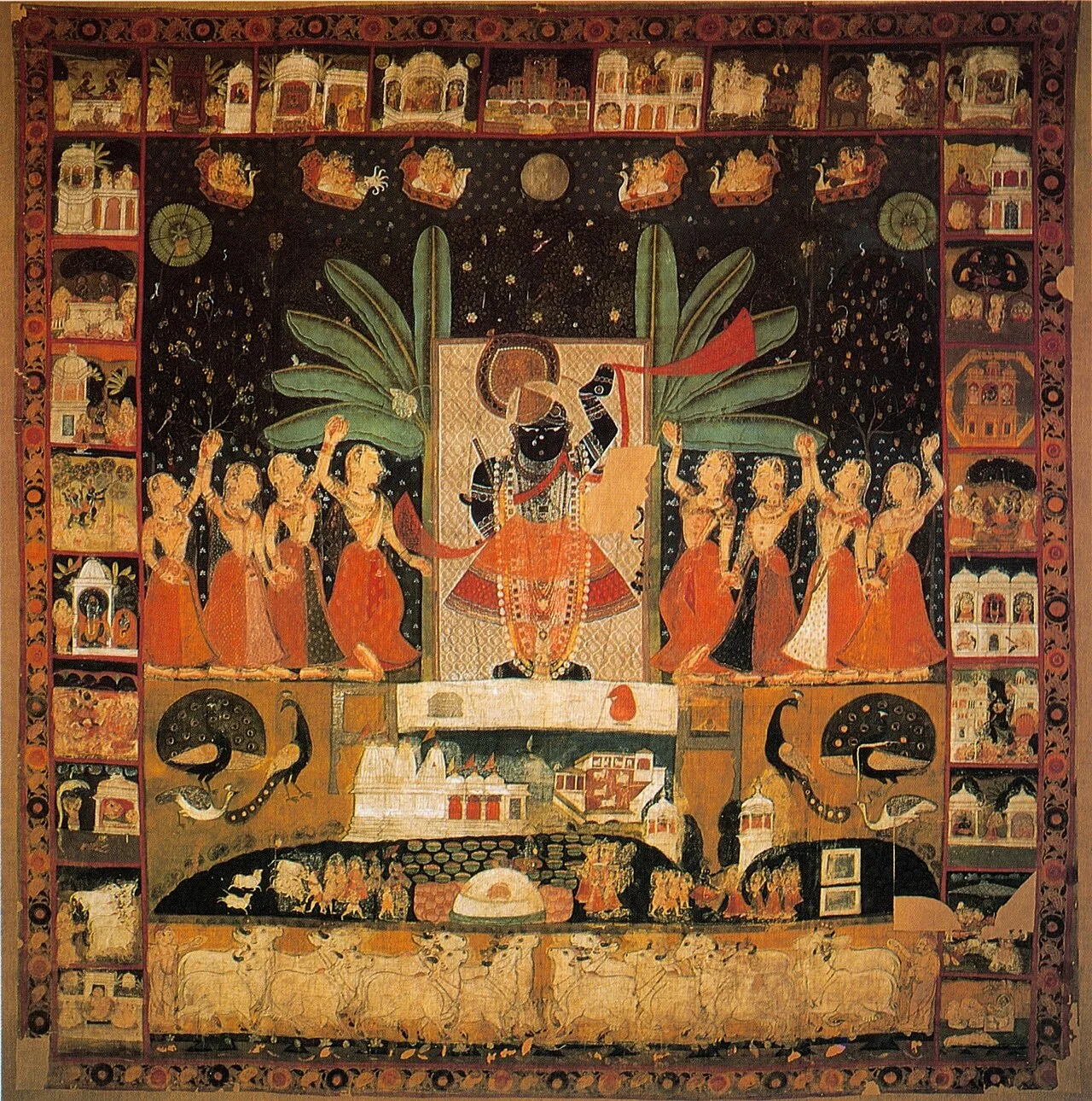
Pichwai paintings are full of symbolism and religious meaning, and each element is carefully chosen to carry layers of significance. The central figure is usually Shrinathji, shown in different poses and settings and surrounded by:
- Gopis: the female devotees of Krishna
- Cows: animals closely linked to Krishna’s story
- Peacocks: a familiar sight in scenes of Krishna
- Lush landscapes: the setting of his pastimes
Every detail, from the choice of colours to the motifs, carries spiritual meaning and reflects the devotion of the artist and the community.
How are Pichwai paintings made?
Creating a Pichwai painting is labour-intensive and needs great skill and patience. Traditionally, the paintings are made on cotton cloth (silk is also used) with natural colours derived from minerals and plants. Artists use intricate brushwork and delicate detailing to bring the stories to life, often adding gold and silver to give the work richness and shine.
This meticulous craftsmanship and attention to detail are hallmarks of Pichwai art, and the skills are passed down through generations of artists.
What stories do Pichwai paintings tell?
Pichwai paintings mostly revolve around the leelas (divine pastimes) of Shrinathji. They show his playful interactions with devotees, his divine deeds and his cosmic forms. Each painting tells a story and invites the viewer into the world of Hindu mythology and spirituality.
Festivals such as Holi, Govardhan Puja, Sharad Purnima and Raas Leela, as well as scenes of the Vrindavan landscape, are common subjects.
Is Pichwai art still alive today?
Yes. Pichwai painting continues to thrive and is valued by collectors, scholars and devotees alike. In recent years there has been renewed interest, with contemporary artists reinterpreting traditional motifs and techniques to create new work that connects with modern audiences. Museums and galleries around the world have also shown pichwai works, for example the Metropolitan Museum of Art in New York, which holds a pichhwai in its collection.
In a world where traditions often fade, Pichwai paintings stand as lasting testaments to the power of art, faith and culture.
Sources and further reading
- Pichhwai – Wikipedia
- Image: “Krishna (Shrinathji) and the Dancing Gopis, Pichhavai from the Temple of Nathdwara, 19th century, Staatliche Museen zu Berlin”, public domain, via Wikimedia Commons.
Frequently asked questions
What are Pichwai paintings?
Pichwai paintings are devotional cloth paintings from Nathdwara in Rajasthan. They were made as hangings behind the deity Shrinathji, a form of Krishna, and depict episodes from his life.
When did Pichwai painting begin?
Its story goes back to the 17th century, when the Shrinathji temple was established at Nathdwara.
What materials are used in Pichwai paintings?
They are traditionally painted on cotton cloth, and sometimes silk, using natural colours from minerals and plants, often with gold and silver for richness.
What do Pichwai paintings show?
They mostly show Shrinathji and the leelas of Krishna, surrounded by gopis, cows, peacocks and lush landscapes, as well as festivals such as Holi and Raas Leela.
Is Pichwai art still practised today?
Yes. It is valued by collectors, scholars and devotees, and contemporary artists are reinterpreting its motifs for modern audiences.