Exploring the Delectable Mangoes of India
TL;DR: India is the world’s largest producer of mangoes, growing hundreds of varieties, each with its own flavour and texture. Alphonso (Hapus), Badami, Dasheri, Kesar, Langra and Totapuri are some of the best known. Choose mangoes that are fragrant, heavy for their size and give slightly when pressed.
Mangoes are like sunshine on a plate. India is the world’s largest producer, accounting for roughly 43% of global output, and hundreds of varieties are grown across the country. Each has its own flavour and texture, which makes the mango a favourite with people of all ages.
The mango is the national fruit of India, Pakistan and the Philippines, and the mango tree is the national tree of Bangladesh. Here are some of the most popular mangoes grown in India.
At a glance
Indian mangoes in brief
- Top producer India, with roughly 43% of global output
- Varieties Hundreds grown across the country
- Botanical name Mangifera indica
- Home region Southern Asia, with eastern India and Myanmar often named
- National fruit of India, Pakistan and the Philippines
- King of mangoes Alphonso (Hapus)
How old is the mango in India?
The mango tree, Mangifera indica, is considered native to southern Asia, with eastern India and Myanmar often named as its home region. Scientists who studied the genes of hundreds of mango trees concluded that the fruit was domesticated more than 4,000 years ago across a wide area that includes India and Southeast Asia. That is an estimate, not a fixed date, and researchers see two broad groups of traditional mangoes, one Indian and one Southeast Asian.
Indian literature also mentions mango groves. A peer-reviewed review in the Indian Journal of Horticulture notes that the Ramayana, thought to have been composed around 500 BC, refers to mango plantations.
From India, the mango travelled with traders, travellers and rulers. Over many centuries it reached East Asia, East Africa and, from about the 16th century, parts of West Africa and Brazil, and later the Caribbean, Mexico and Australia. Today it is grown in tropical and subtropical regions around the world.
The histories of individual varieties, such as Alphonso, Dasheri or Langra, are far less certain. Many of them are old selections that farmers have multiplied by grafting for centuries, so we have left out exact dates and origin stories for them.
Timeline
How the mango spread
- More than 4,000 years ago Gene studies suggest the mango was domesticated across India and Southeast Asia. This is an estimate, not a fixed date.
- c. 500 BC The Ramayana, thought to date from about then, refers to mango plantations.
- Over many centuries Traders, travellers and rulers carried the mango to East Asia and East Africa.
- From about the 16th century The mango reached parts of West Africa and Brazil, and later the Caribbean, Mexico and Australia.
- Today It is grown in tropical and subtropical regions around the world.
Which are the most popular mango varieties in India?
These are just a few of the many mango varieties grown in India. Apart from the famous ones, the list includes Chausa, Safeda, Neelam, Lalbagh, Raspuri, Mulgoba, Lakshmanbhog, Amrapali, Fazli, Pairi, Mallika, and it goes on.
Alphonso (Hapus)
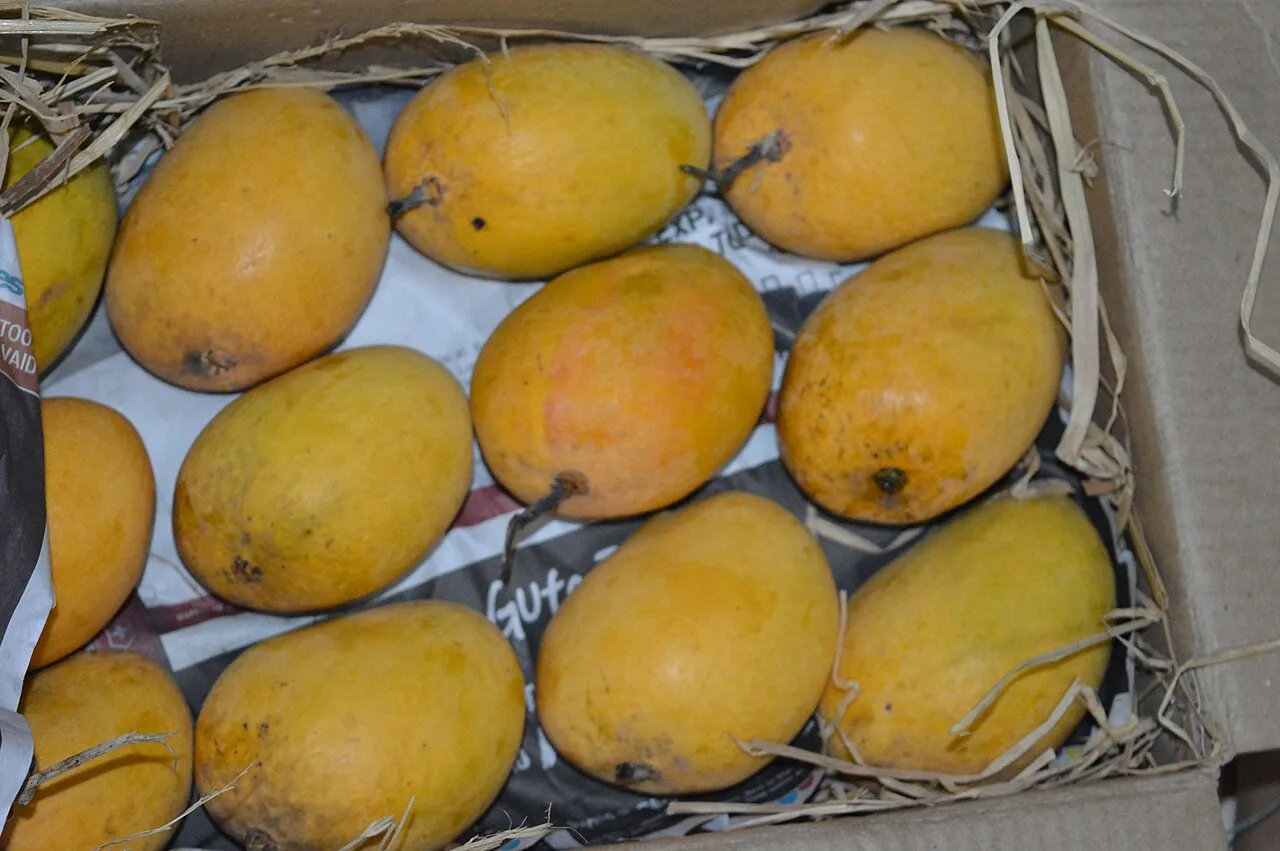
Alphonso is also known as Hapus. It is the most famous mango variety in India, known for its sweet, creamy flesh, and it is often called the king of mangoes. Alphonso mangoes are grown mainly in the Konkan region of Maharashtra and are in season roughly from February to May.
Badami
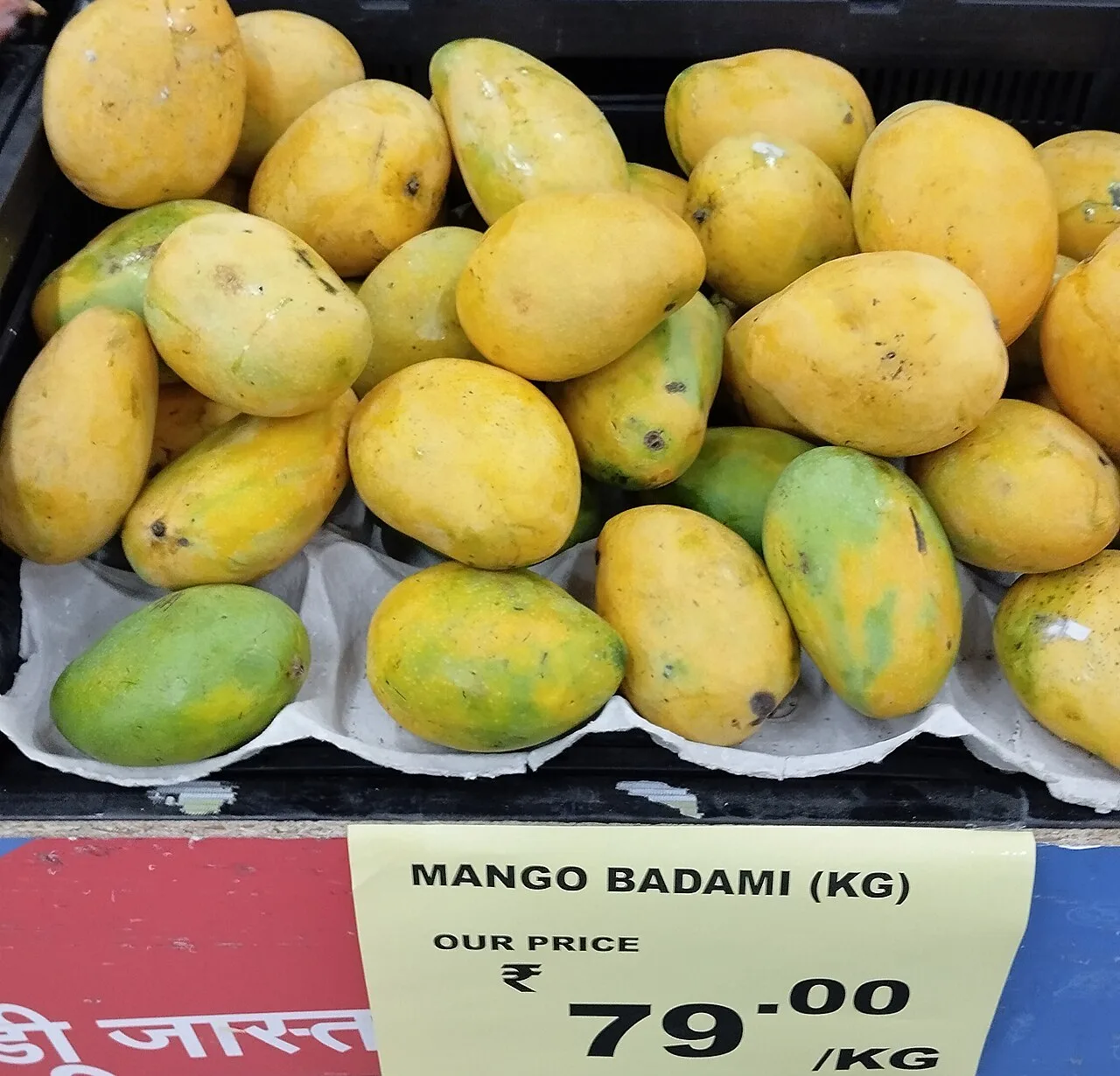
This variety is similar to the Alphonso and is grown mainly in the southern state of Karnataka. It has a creamy texture, a sweet flavour and a pleasant aroma.
Dasheri
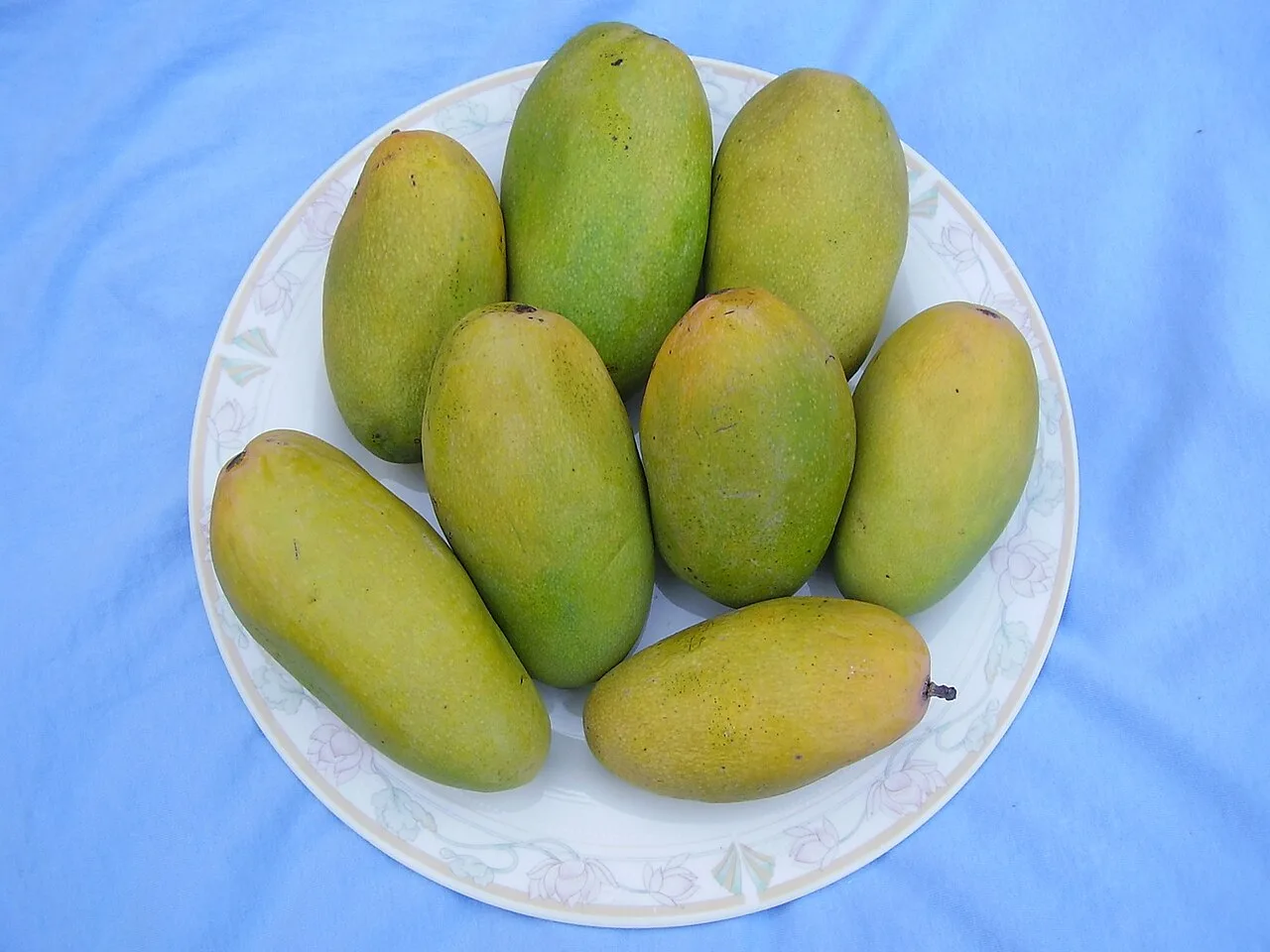
Dasheri is a large, fleshy variety known for its fibreless flesh, sweet taste and aromatic flavour. It is often used to make mango pickles and chutneys. Dasheri mangoes are grown in Uttar Pradesh and are in season from June to August.
Kesar
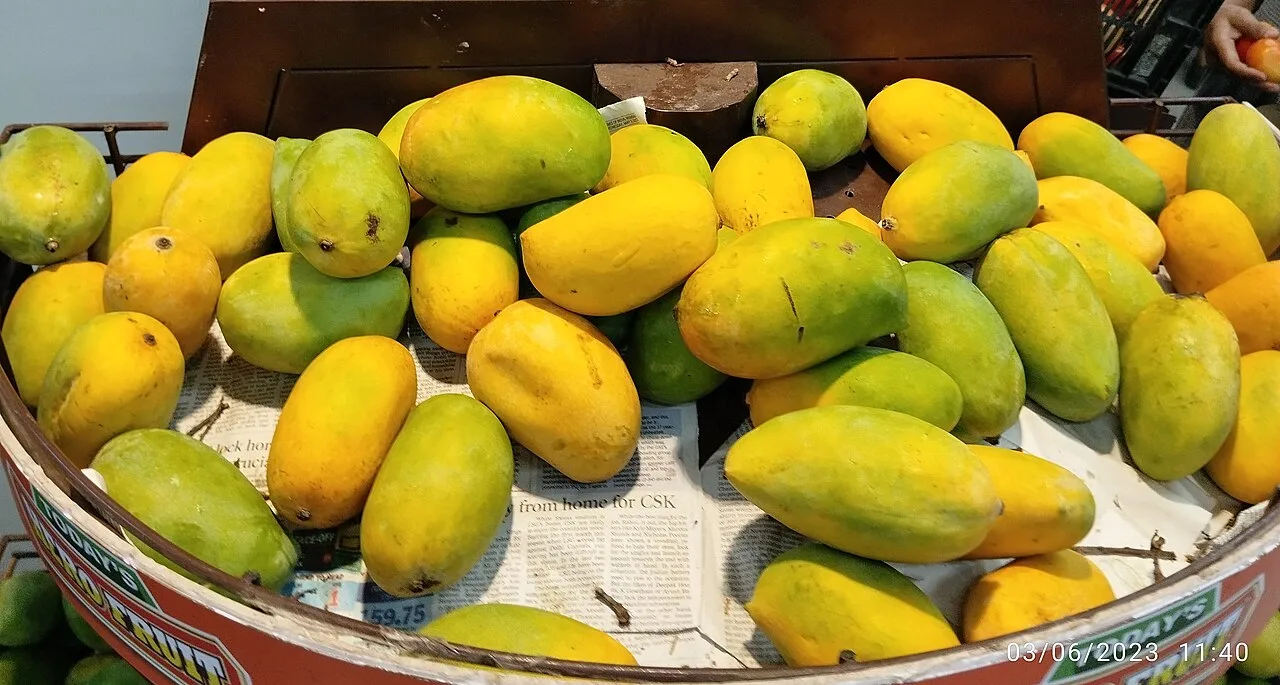
Kesar is a prized, relatively expensive variety, known for its bright yellow-orange colour and sweet, aromatic flesh. Kesar mangoes are grown in Gujarat and are in season from May to July. They are often used to make desserts like mango ice cream and mango shrikhand.
Langra
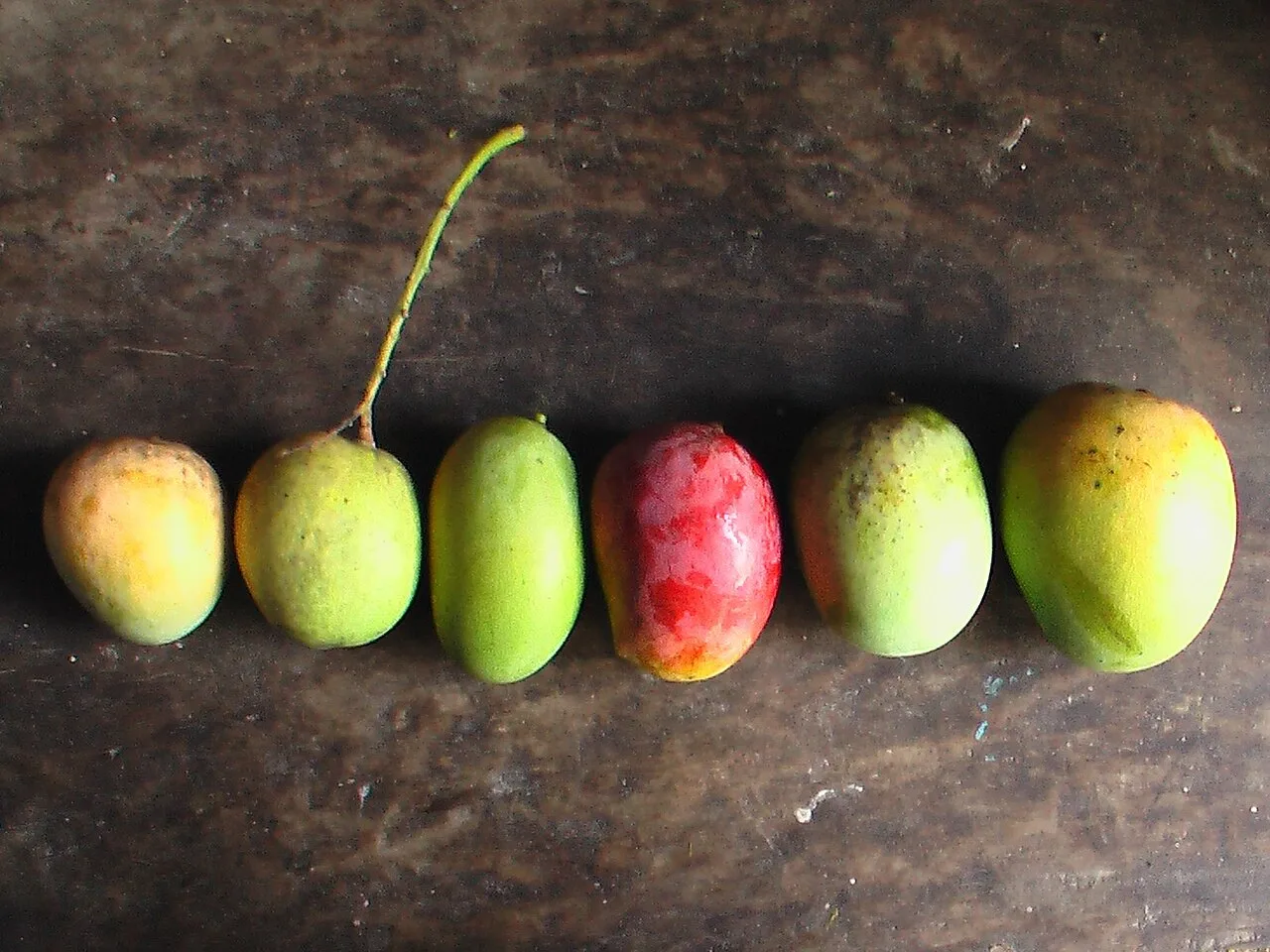
Langra is a large, juicy variety with sweet, creamy flesh. It is often eaten fresh or used to make mango lassi. Langra mangoes are grown in Uttar Pradesh and are in season from June to August.
Totapuri
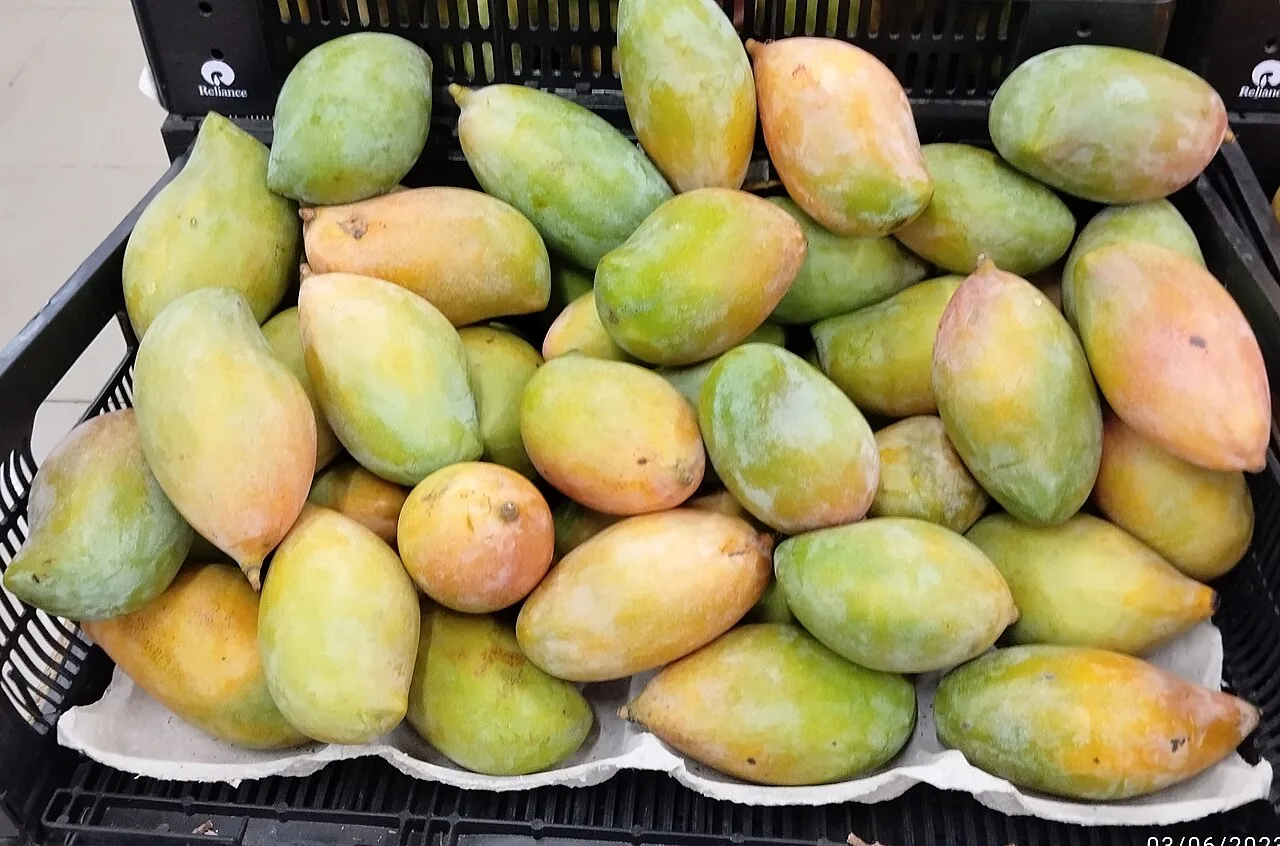
Totapuri is another popular variety, with a distinct oblong shape. It is known for its tart, juicy flesh and is often used to make mango juice and other desserts. Totapuri mangoes are grown in Karnataka and are in season from May to July.
Varieties
Six well-known Indian mangoes
- Alphonso (Hapus) Sweet, creamy flesh. Grown mainly in the Konkan region of Maharashtra; in season roughly February to May.
- Badami Similar to the Alphonso, with a creamy texture, sweet flavour and pleasant aroma. Grown mainly in Karnataka.
- Dasheri Large and fleshy with fibreless flesh. Grown in Uttar Pradesh; in season June to August.
- Kesar Bright yellow-orange with sweet, aromatic flesh. Grown in Gujarat; in season May to July.
- Langra Large and juicy with sweet, creamy flesh. Grown in Uttar Pradesh; in season June to August.
- Totapuri Oblong in shape, with tart, juicy flesh. Grown in Karnataka; in season May to July.
How do you pick good mangoes?
If you are looking for good mangoes, these tips will help you pick the best ones.
- Look for ripe mangoes: A ripe mango gives slightly when you press it gently with your thumb. It should be ripe but not overripe.
- Check the colour: Different varieties have different colours when ripe, but in general look for bright, vibrant colours.
- Smell the mango: A ripe mango has a sweet, fragrant aroma.
- Check for blemishes or bruises: Avoid soft spots or bruises, which may mean the fruit is overripe or damaged.
- Consider the weight: A good mango feels heavy for its size, which suggests it is juicy and ripe.
- Check the stem: The stem should be intact and green, a sign that the fruit is fresh.
- Know your varieties: Different varieties have different flavours and textures, so find the ones that suit your taste.
Frequently asked questions
Which country produces the most mangoes?
India is the world’s largest producer of mangoes, with roughly 43% of global production and hundreds of varieties grown across the country.
How old is the mango in India?
The mango is considered native to southern Asia, especially eastern India and Myanmar. A 2020 genome study found it was domesticated more than 4,000 years ago across India and Southeast Asia. This is an estimate, not an exact date. From there, traders and travellers carried the fruit across Asia, Africa and eventually the Americas.
Which mango is called the king of mangoes?
The Alphonso, also known as Hapus, is often called the king of mangoes for its sweet, creamy flesh. It is grown mainly in the Konkan region of Maharashtra.
Which mangoes are in season from June to August?
Dasheri and Langra, both grown in Uttar Pradesh, are in season from June to August.
Which countries have the mango as their national fruit?
The mango is the national fruit of India, Pakistan and the Philippines. The mango tree is the national tree of Bangladesh.
How can I tell if a mango is ripe?
A ripe mango gives slightly when pressed gently, smells sweet and fragrant, feels heavy for its size and has no soft spots or bruises.
Sources and further reading
The genome evolution and domestication of tropical fruit mango, Genome Biology (Wang et al., 2020).
Mango origin and spread (Indian Journal of Horticulture, vol. 51, 2016), Indian Journal of Horticulture.
Mango (plant and fruit), Encyclopaedia Britannica.
Related reading
Image credit: “ALPHONSO MANGO” by Kunaljadhav19, via Wikimedia Commons, licensed under CC BY-SA 4.0. (Alphonso)
Image credit: “Badami Indian Mango variety IMG 20230603 (1)” by Dr. Raju Kasambe, via Wikimedia Commons, licensed under CC BY-SA 4.0. (Badami)
Image credit: “Dosehri” by Khalid Mahmood, via Wikimedia Commons, licensed under CC BY-SA 3.0. (Dasheri)
Image credit: “Mango Kesar Indian variety IMG 20230603 114021 (3)” by Dr. Raju Kasambe, via Wikimedia Commons, licensed under CC BY-SA 4.0. (Kesar)
Image credit: “Vikramshila Agrovet 2 Langra Mango farm, Mathurapur, Bhagalpur Bihar” by Abhishek Priyadarshi, via Wikimedia Commons, licensed under CC BY-SA 3.0. (Langra)
Image credit: “Totapuri Mango Indian variety IMG 20230603 113951 (3)” by Dr. Raju Kasambe, via Wikimedia Commons, licensed under CC BY-SA 4.0. (Totapuri)