Kathputli: A Traditional Indian Puppetry Art Form
In short: Kathputli is a traditional string-puppet art from Rajasthan, whose name comes from the Hindi words for wood (kath) and doll (putli). Wooden puppets in bright cloth costumes act out folk tales, helped by music, song and dialogue. The art is fading today, but several organisations are working to preserve it.
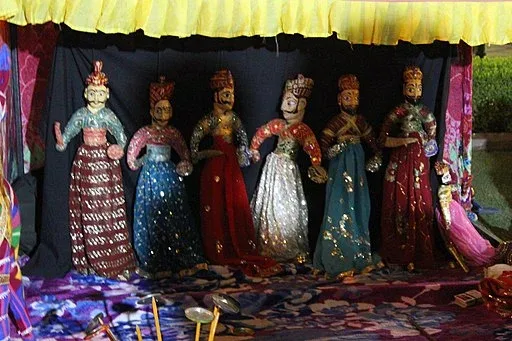
In Rajasthan, families of travelling puppeteers once carried small stages from village to village to perform Kathputli.
It is a traditional Indian puppetry art form, a way of telling stories through puppets made of wood and cloth. Government sources describe it as believed to be more than a thousand years old, though no exact date is known.
At a glance
Kathputli in brief
- Place Rajasthan
- Name means Kath (wood) and putli (doll)
- Puppets Light carved wood, bright paint and colourful cloth costumes
- Control Strings attached to the limbs and head
- Best-loved tale Amar Singh Rathore
- Age Believed to be more than a thousand years old; no exact date is known
Where does Kathputli come from?
Nobody can give Kathputli a birth date. Government of India pages describe the tradition as believed to be more than a thousand years old, while Britannica says only that the origins of Indian puppet traditions cannot now be fixed. So ‘a thousand years or more’ is a rough guess, not a record.
What is better documented is how it was performed. Families of travelling puppeteers, traditionally including the Bhat community of Rajasthan, took small portable stages from village to village and to fairs, telling stories of heroes and kings. The best-loved tale is that of Amar Singh Rathore, a Rajput noble of the early seventeenth century, in the time of the Mughal emperor Shah Jahan. Museum descriptions note that the puppets typically have carved wooden heads and no legs, and Britannica notes that in Rajasthan a single string usually runs from the puppet’s head to the puppeteer’s hand.
In recent decades the setting has changed. Troupes have toured abroad at festival invitations since around 1980, but researchers and museum records also describe puppets being made more and more as tourist souvenirs, with older story traditions fading in places such as Udaipur and Bassi. Training workshops and government-supported shows now try to keep the craft alive.
Timeline
Kathputli through time
- Believed, more than 1,000 years ago Government sources call the tradition more than a thousand years old. This is a rough guess, not a record.
- Early 17th century The time of Amar Singh Rathore, a Rajput noble in the era of Shah Jahan, hero of the best-loved Kathputli tale.
- Around 1980 Troupes began touring abroad at festival invitations.
- Recent decades Puppets are made more and more as tourist souvenirs, and older story traditions are fading in places such as Udaipur and Bassi.
Is Kathputli mentioned in old texts?
The image of beings moved like puppets appears in the Bhagavad Gita (18.61):
īśvaraḥ sarva-bhūtānāṁ hṛd-deśe ‘rjuna tiṣṭhati | bhrāmayan sarva-bhūtāni yantrārūḍhāni māyayā ||
In simple words: God is present in the hearts of all beings and moves them by his power, as if they were mounted on a machine, much as a puppet master moves his puppets.
How are the puppets made and performed?
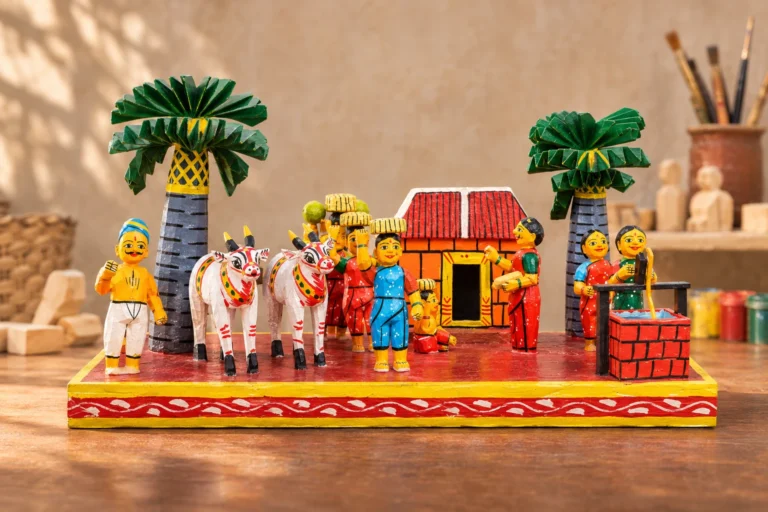
The puppets are carved from light wood, painted in bright colours and dressed in colourful cloth in traditional Indian attire. The puppeteers move them with strings attached to their limbs and heads.
Performances usually draw on folk tales, myths and legends, with music, singing and dialogue. Men and women both take part, and the art is often passed down within families.
- CarveThe puppets are carved from light wood.
- PaintEach puppet is painted in bright colours.
- DressThe puppets are dressed in colourful cloth in traditional Indian attire.
- Attach the stringsStrings are attached to the limbs and head, and the puppeteers move the puppet with them.
Why is Kathputli fading?
Kathputli is losing popularity, especially among younger people, as electronic entertainment becomes more widely available. Many skilled puppet makers and performers have also passed away or stopped practising, which makes it harder to preserve the art.
How is Kathputli being preserved?
Efforts are being made to revive the art. Organisations such as Rupayan Sansthan in Jodhpur and the Bharatiya Lok Kala Mandal in Udaipur work to preserve and promote it, and the latter runs a puppet theatre and museum.
Frequently asked questions
What does Kathputli mean?
It combines the Hindi words kath (wood) and putli (doll).
How old is Kathputli?
Nobody knows exactly. Government sources call Kathputli more than a thousand years old, but that is a belief, not a dated fact. It is best documented as a travelling-puppeteer tradition of Rajasthan, famous for the story of Amar Singh Rathore, a Rajput noble of Shah Jahan’s time in the early 1600s.
Where does Kathputli come from?
From Rajasthan. The Bhat community is credited with starting it.
How are Kathputli puppets controlled?
With strings attached to their limbs and heads.
What stories do Kathputli shows tell?
Folk tales, myths and legends, with music, singing and dialogue.
Why is Kathputli in danger?
Younger audiences prefer electronic entertainment, and many skilled puppet makers and performers have stopped practising.
Sources and further reading
Kathputlis of Rajasthan, Incredible India, Ministry of Tourism, Government of India.
Kathputli (string puppet), object record HC.1999.1430, Horniman Museum and Gardens.
Puppetry, Encyclopaedia Britannica.
Kathputli (Rajasthan) entry on the WePA encyclopedia of puppetry arts, UNIMA (Union Internationale de la Marionnette).
- Kathputli (puppetry) – Wikipedia (in English)
Related reading
- Krishna Art: The 16 Kalas and 13 Famous Artworks.
- Bone Carving in India: History, Process and Craft Centres
- Allagadda Stone Carving
Image credit: “Katputli” by Rakami Art Studio, via Wikimedia Commons, licensed under Creative Commons Attribution-Share Alike 4.0 International.