The Significance of Diya: Diwali Decoration, Light, Tradition, and Symbolism
TL;DR: A diya is a traditional oil lamp that is much more than a source of light. Its flame stands for knowledge, hope and the victory of good over evil. Diyas are lit during Diwali, weddings and other celebrations, passed down as family tradition, and made by artisans as works of art.
In this article
- What is the history of the diya and Diwali lamps?
- What does the diya symbolise?
- What is the religious and spiritual meaning of a diya?
- Why is a diya lit at cultural celebrations?
- Can lighting a diya be a personal ritual?
- How does the diya pass traditions to the next generation?
- Is a diya also a work of art?
- Frequently asked questions
- Sources and further reading
The flickering glow of a diya, a traditional oil lamp, holds a special place in the hearts of millions, in India and among people of many cultures around the world, especially through Diwali decorations. These small, often beautifully crafted lamps carry deep symbolic and cultural meaning that goes beyond lighting a room. Here we look at the traditions and symbolism behind the diya.
At a glance
The diya in brief
- What it is A traditional oil lamp, often beautifully crafted
- Lit at Diwali, weddings and other celebrations
- The flame stands for Knowledge, hope and the victory of good over evil
- Word Diwali Sanskrit: deepa means lamp or light, avali means a row
- Oldest example cited A pottery lamp from Nal, dated to around 2500 BC
- Also A personal act of reflection, meditation and gratitude
What is the history of the diya and Diwali lamps?
Burning oil or fat in a small container is one of humanity’s oldest ways of making light, so the diya belongs to a very long story. A museum example is a hand-thrown pottery vessel from Nal in the Indus Valley (present-day Pakistan), dated to around 2500 BC, now at the Pitt Rivers Museum in Oxford. Its corners were pinched to hold wicks, and the museum assumes it was an oil lamp. This is one object, not a straight line to today’s diya, but it shows how long clay lamps have been in use in the region.
The festival name Deepavali, or Diwali, comes from Sanskrit: deepa means lamp or light and avali means a row. Scholars find written references to it from the early centuries of the common era. A 1945 study by P. K. Gode found the earliest mention he could trace in the Kamasutra (dated roughly 50-400 CE), which describes a festival called Yaksharatri that a twelfth-century scholar later linked with Diwali. Later records include al-Biruni’s account from about 1030 CE and the Ain-i-Akbari of 1590, so the festival and its lamps are well documented over many centuries.
Why Diwali is celebrated differs by region and community. According to belief, different communities link it to different stories, and this page does not rank them. What they share is light: diyas are placed in rows along the edges of homes and temples, and some are floated on rivers. In belief, the lamp stands for light overcoming darkness, which is why the diya remains the centre of the festival.
Timeline
Diyas and Diwali in records
- Around 2500 BC A pottery lamp from Nal in the Indus Valley, now at the Pitt Rivers Museum. One object, not a straight line to today’s diya.
- Early centuries CE Written references to Deepavali, or Diwali, begin to appear.
- Roughly 50-400 CE The Kamasutra mentions Yaksharatri, which a twelfth-century scholar later linked with Diwali.
- About 1030 CE Al-Biruni’s account mentions the festival.
- 1590 The Ain-i-Akbari records it as well.
What does the diya symbolise?
At its core, a diya gives light. In a world where darkness can stand for ignorance, fear and uncertainty, the flame of a diya represents the eternal light of knowledge and truth that drives the darkness away.
Meanings
Why a diya is lit
- Knowledge and truth The flame stands for the light that drives away ignorance, fear and uncertainty.
- Blessings In Hinduism, lighting a diya is believed to invite the blessings of the deities.
- New beginnings At weddings and festivals it marks new journeys and the lighting up of one’s path in life.
- Personal moment A chance for solitude, meditation, peace and gratitude.
- Passing it on For generations it has carried cultural and spiritual traditions to younger family members.
What is the religious and spiritual meaning of a diya?
In Hinduism, the diya is a prominent symbol of spirituality and is used in many religious ceremonies, particularly during the festival of Diwali. Lighting a diya is believed to invite the blessings of the deities and signifies the triumph of good over evil.
Why is a diya lit at cultural celebrations?
Beyond religion, lighting a diya is a customary practice at celebrations such as weddings and festivals. It marks the beginning of new journeys and the lighting up of one’s path in life, and the diya is often seen as an auspicious symbol.
Can lighting a diya be a personal ritual?
Yes. Lighting a diya can be a deeply personal and reflective act. It offers a moment of solitude and meditation, a chance to connect with your inner self, find peace and express gratitude.
How does the diya pass traditions to the next generation?
For generations, lighting the diya has been a way of passing cultural and spiritual traditions to younger members of the family. It builds a sense of identity and belonging to one’s cultural heritage.
Is a diya also a work of art?
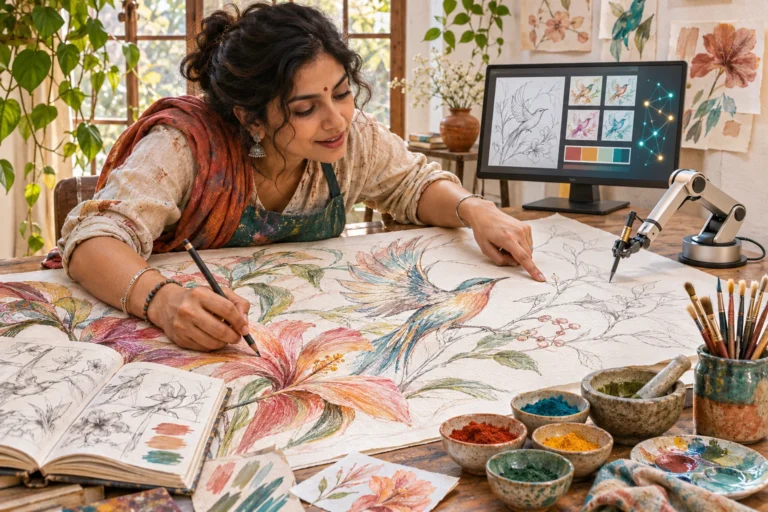
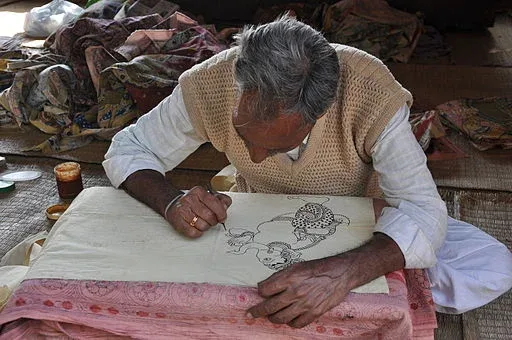
Beyond their symbolism, diyas are often exquisite works of art. Craftspeople create intricate designs, and many families treasure heirloom diyas that have become an integral part of home decor.
In conclusion, the diya stands for enduring values and traditions passed down through the ages. It carries a message of hope, unity and spirituality. Whether you light one in a religious ceremony, a cultural celebration or simply to find inner peace, it is a reminder of the light that can guide us through life’s journeys.
Frequently asked questions
What is a diya?
A diya is a traditional oil lamp, often beautifully crafted, that is lit during Diwali and other religious and cultural occasions.
What is the history of the diya and Diwali lamps?
Clay oil lamps are thousands of years old; an Indus Valley pottery lamp from around 2500 BC is in a museum in Oxford. Diwali, from Sanskrit for a row of lamps, appears in written records from the early centuries CE. Communities explain the festival through different beliefs, and lamps are the shared thread.
What does the flame of a diya represent?
It represents the eternal light of knowledge and truth that drives away darkness, such as ignorance, fear and uncertainty.
Why are diyas lit during Diwali?
In Hinduism, lighting a diya during Diwali is believed to invite the blessings of the deities and signifies the triumph of good over evil.
Are diyas used only for religious rituals?
No. They are also lit at weddings and other celebrations, and as a personal act of reflection, meditation and gratitude.
Can a diya be decorative art?
Yes. Artisans make diyas with intricate designs, and many families keep cherished heirloom diyas as part of their home decor.
Sources and further reading
Pottery lamp, Pakistan, Pitt Rivers Museum, University of Oxford.
A History of Diwali, JSTOR Daily.
Diwali (OpenLearn course), The Open University.
Diya, Encyclopaedia Britannica.
Related reading
- Pokharan Pottery: Capturing the Soul of the Desert.
- Renewing Spirits and Traditions: Celebrating Gudi Padwa in Maharashtra
- Gorakhpur Terracotta
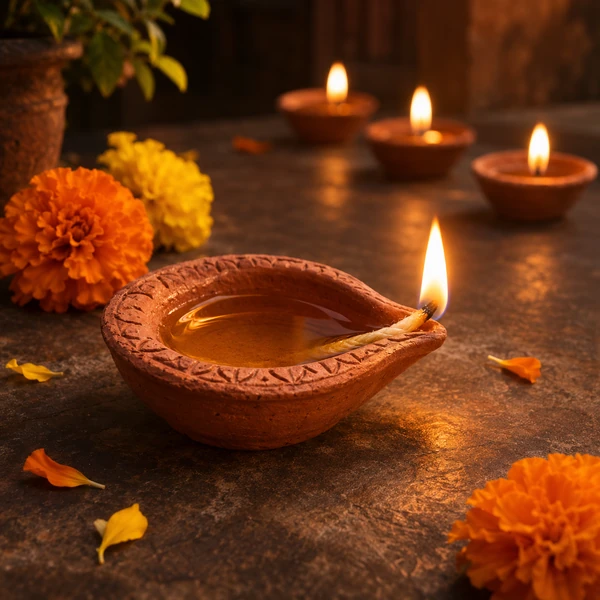
Image credit: AI-generated illustration created for Thigma Art, shown for representation; it is not a photograph of an actual diya.