Rogan Painting of Kutch: The Craft of Castor-Oil Paint on Cloth
TL;DR: Rogan painting is a craft from Kutch, Gujarat, in which thick, castor-oil-based paint is drawn onto dark cloth with a stylus. It is closely tied to the Khatri community, and the village of Nirona is its best-known home today. The craft holds a Geographical Indication (GI) status and gained wide attention after two rogan paintings were gifted to US President Barack Obama in 2014.
In this article
Rogan painting is one of the most distinctive textile crafts of Kutch. Instead of dyes soaked into the fabric, the artist works with a paste that sits on top of the cloth, and the finished designs look almost embroidered. Below is a plain, fact-checked guide to what rogan is, how it is made and why it matters.
What is rogan painting?
Rogan painting is a cloth-painting craft from the Kutch region of Gujarat, India. It is associated with the Khatri community. The name is said to come from the Sanskrit word rangan.
The craft is often described as about 300 years old and as having come from Persia, but this origin is a local tradition rather than an established historical fact, so it is best read as “said to”.
How is rogan paint made?
The paint is the heart of the craft. Castor oil is boiled for about two days until it turns into a thick base. Vegetable pigments and a binding agent are then added to make a heavy, sticky paint. Some artists also use linseed, walnut or poppy seed oil instead of castor oil.
Traditional rogan uses five colours: white, orange, yellow, blue and green. They are usually shown against dark cloth, which makes them stand out.
How is a rogan design painted on cloth?
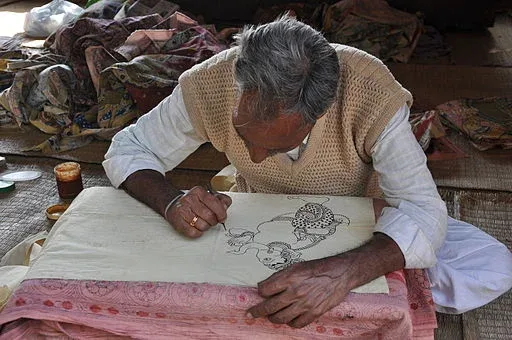
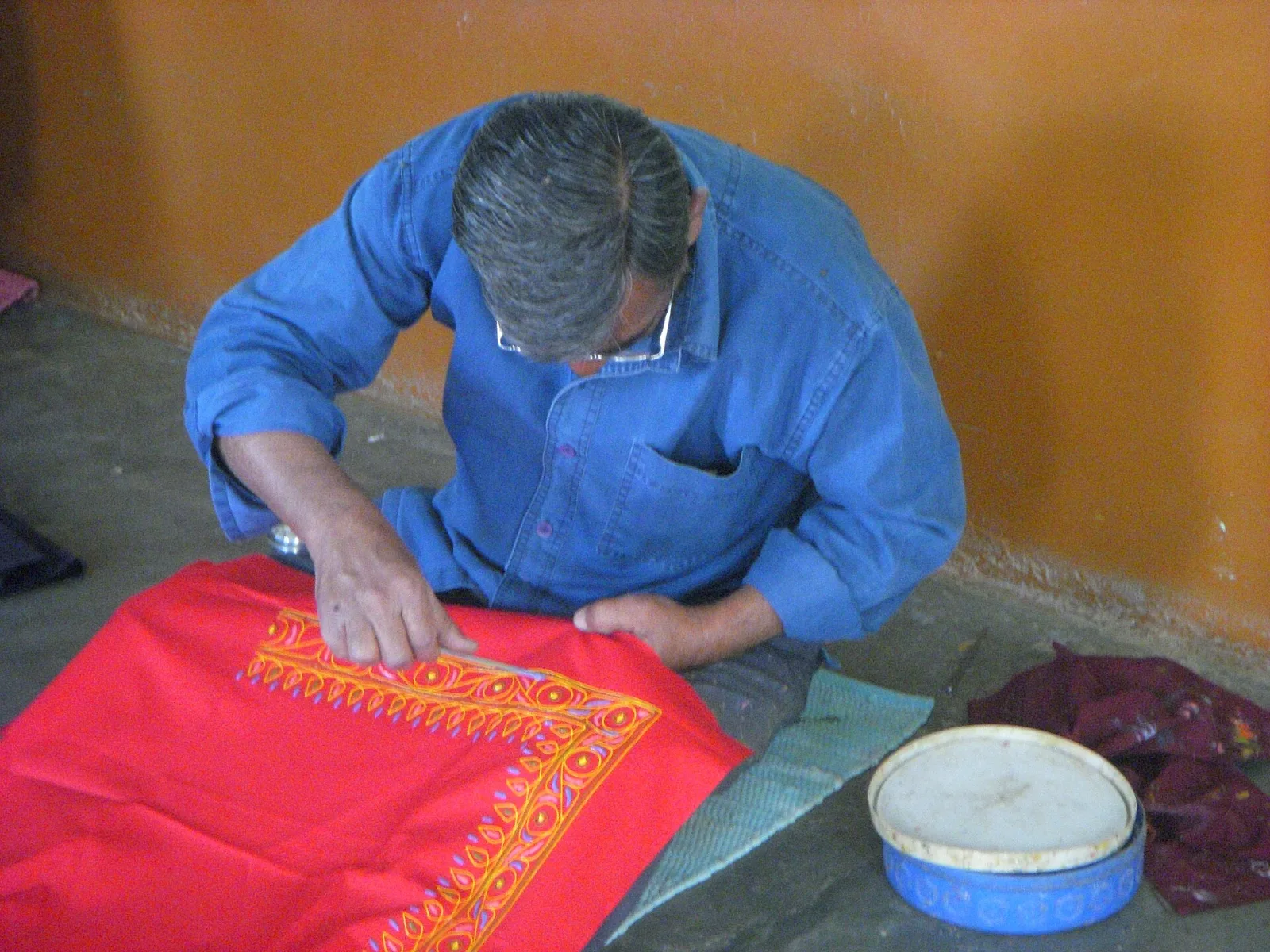
The artist does not use a brush for the main outline. A thick strand of paint is lifted on a stylus, called a tulika, and then drawn out in fine, thread-like lines without the stylus touching the cloth. Many designs are painted on only one half of the fabric. The cloth is then folded so that the paint prints onto the other half, giving a mirror image.
Three styles are usually described:
- Rogan (freehand): the design is drawn with the stylus and, often, folded to create a mirror image.
- Nirmika: patterns are pressed onto the cloth using carved brass blocks.
- Varnika: a freehand base design is made in one colour, and further colours are added with fine brushes, sometimes with glitter or mica.
What are the common rogan motifs?
Flowers, animals and local folk-art designs are common. The best-known motif is the tree of life, which appears again and again in rogan work from Kutch.
Where is rogan painting practised today?
Nirona, a village in Kutch about 40 km from Bhuj, is the place most visitors associate with rogan. It is also known for leatherwork and lacquerwork. The Khatri family of Nirona, which is said to have practised rogan for eight generations, is the best-known rogan family.
Abdul Gafur Khatri, born in Kutch in 1965 and based in Nirona, learned the craft from his father and grandfather. He received the Padma Shri in 2019. From 2010 the family also began training women in the craft, which had earlier been passed on only to men.
How did rogan painting reach the world stage?
In 2014, Prime Minister Narendra Modi gave US President Barack Obama two rogan paintings during a visit to the White House. One of them was a tree of life painted by Abdul Gafur Khatri and his younger brother Sumar Khatri. The gift, reported by the Times of India on 3 October 2014, brought new attention to the craft.
Kutch rogan craft has since been given Geographical Indication status, announced in March 2024 along with several other Indian products. A GI tag identifies a product with its place of origin and helps protect it from imitation.
Why is rogan painting under threat?
Machine-made textiles hurt the craft, and it is now practised by only a small number of families. According to craftspeople in Nirona, it nearly died out before the 2014 gift to Barack Obama sparked a revival. Training new artists, including women, matters for its future.
Sources and further reading
- Rogan painting – Wikipedia (in English)
- Abdul Gafur Khatri – Wikipedia (in English)
- Visit Kutch’s colourful craft village Nirona – Village Square (in English)
- Image credit: “Rogan painting” by Rick Bradley, Wikimedia Commons, licensed CC BY 2.0; resized and converted to WebP.
Frequently asked questions
What is rogan painting?
Rogan painting is a cloth-painting craft from Kutch, Gujarat, in which a thick paint made from boiled castor oil and pigments is drawn onto cloth with a stylus.
How is rogan paint made?
Castor oil is boiled for about two days, then vegetable pigments and a binding agent are added to make a thick paint. Other oils such as linseed, walnut or poppy seed are sometimes used.
Which colours are used in traditional rogan?
Traditional rogan uses five colours: white, orange, yellow, blue and green, usually on dark cloth.
Why are rogan designs often symmetrical?
Many artists paint one half of the design and then fold the cloth so the paint prints onto the other half, which creates a mirror image.
Who is Abdul Gafur Khatri?
Abdul Gafur Khatri is a rogan artist from a Khatri family in Nirona, Kutch. He received the Padma Shri in 2019, and he and his brother Sumar Khatri painted the tree of life gifted to Barack Obama in 2014.