Bengali Patachitra: The Vibrant World of Folk Art
TL;DR: Bengali Patachitra is the scroll-painting tradition of West Bengal. Wandering artists called Patuas painted stories of gods and goddesses, folklore, saints and everyday life on cloth with natural colours, then unrolled the scrolls and sang the story to villagers. It is still a living craft, passed down in families of Patuas and Chitrakars.
Bengali Patachitra, a traditional form of scroll painting from the eastern Indian state of West Bengal, tells stories, legends and myths through vibrant visuals. The name combines “pata” (cloth) and “chitra” (picture), and the art is deeply rooted in the cultural heritage of Bengal. Let us take a colourful journey through its history, techniques, themes and cultural significance.
At a glance
Bengali Patachitra in brief
- Region West Bengal
- What it is Narrative scroll painting, seen and sung together
- Artists Patuas, also called Chitrakars
- Name Pata means cloth, chitra means picture
- Painted on Cotton or tussar silk, and sometimes dried leaves
- Performance Pat khelano (unrolling) with pater gaan (the song)
What is the history of Patachitra?
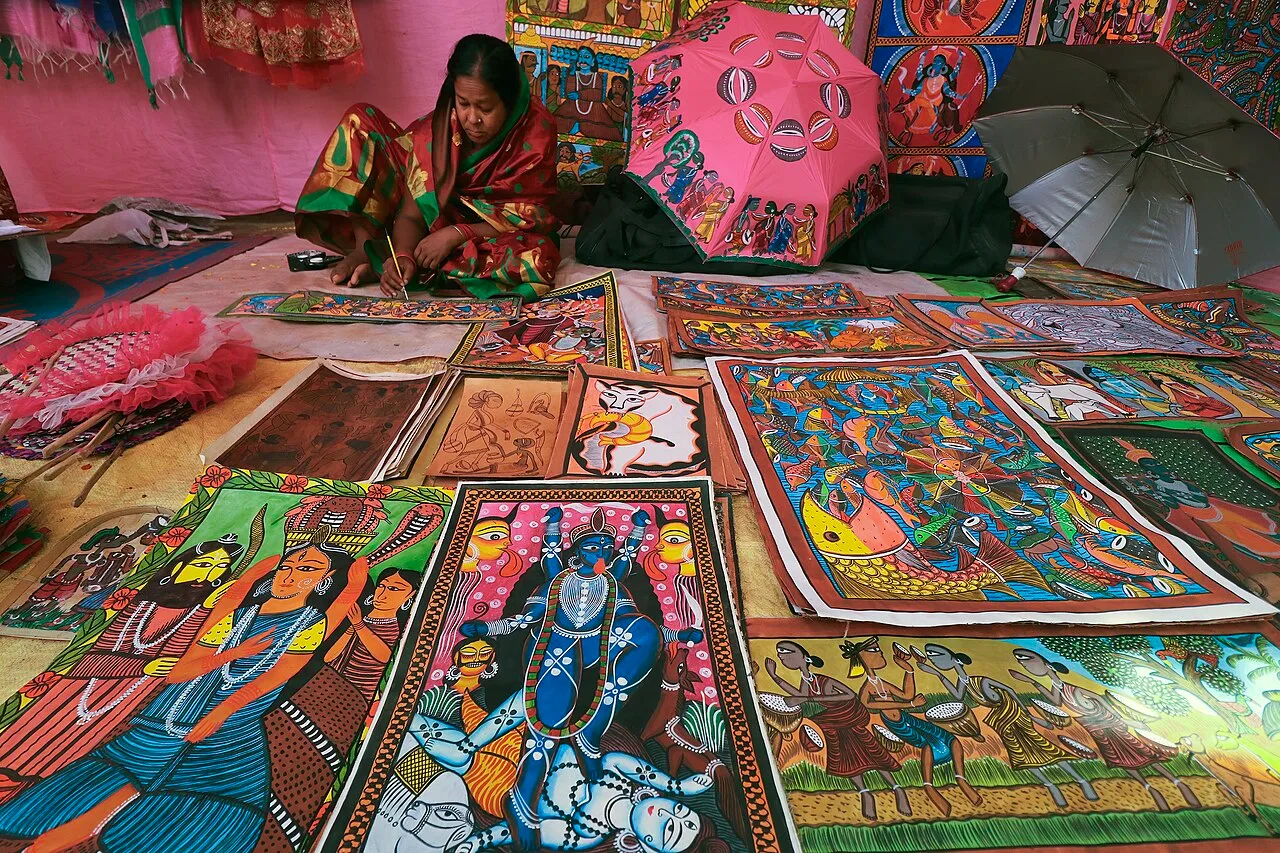
Patachitra, or pata painting, is a form of narrative scroll painting. In Bengal the painters are known as Patuas or Chitrakars, and they traditionally travelled from village to village, unrolling a painted scroll and singing a ballad that told its story. The unrolling is called pat khelano and the song is pater gaan. Before modern media, villagers paid them in rice, vegetables or a few coins.
Exactly how old the Bengali tradition is cannot be pinned down. Scroll painting is very old in South Asia, and Sanskrit literature mentions wandering showmen with painted scrolls, though precise dates are not given. Scholars who have studied Bengal trace the Chitrakars in literature to at least the 13th century, and the oldest surviving Bengal scrolls date from around the 18th century. Some oral accounts suggest an earlier start, but these are hard to confirm.
Patuas painted on cloth and sometimes dried leaves, and their stories were varied. Gods and goddesses such as Durga appear, and so do tales of local figures such as the saint Satya Pir, along with scenes from daily life and, more recently, news events. Some Patuas also moved to Calcutta in the 18th and 19th centuries, where the Kalighat style developed.
Competition from printed pictures, cinema and television reduced the audience for travelling performers. Since around the 2000s, villages such as Naya in West Bengal have found new buyers, with scrolls shown in museums. Many painters now sell scrolls without performing the songs.
Timeline
Patachitra through the centuries
- Exact age unknown Scroll painting is very old in South Asia, and Sanskrit literature mentions wandering showmen with painted scrolls, without precise dates.
- At least the 13th century Scholars trace the Chitrakars of Bengal in literature to at least this century.
- 18th and 19th centuries Some Patuas move to Calcutta, where the Kalighat style develops.
- c. 18th century The oldest surviving Bengal scrolls date from around this time.
- Since around the 2000s Villages such as Naya find new buyers, with scrolls shown in museums.
What is Bengali Patachitra?
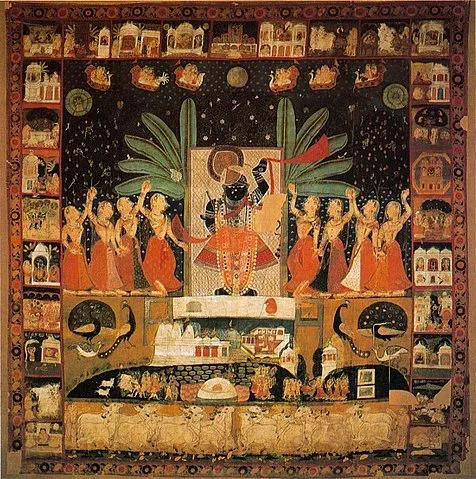
Patachitra is a form of narrative painting. The artist paints a story in a series of frames on a long scroll of cloth, and the story is then performed aloud. Each painting is paired with a song, so the art is seen and heard together.
How is a Patachitra painting made?
The materials and methods are traditional and mostly natural.
- Canvas preparation: The base is usually untreated fabric such as cotton or tussar silk, coated with a paste (often described as chalk and tamarind seed paste) to give a smooth surface for painting.
- Painting: Artists use natural pigments from minerals, plants and stones. Yellow (from turmeric), red (from vermilion) and black (from lamp soot) are common colours, along with chalk white and indigo blue. Fine details and lines are drawn with brushes made from animal hair.
- Themes and motifs: The paintings show stories of gods and goddesses such as Durga, folklore, saints such as the Muslim saint Satya Pir, scenes from daily life and, more recently, news events.
Materials
What goes into a scroll
- Canvas Untreated cotton or tussar silk, coated with a paste often described as chalk and tamarind seed paste.
- Colours Natural pigments from minerals, plants and stones: yellow from turmeric, red from vermilion, black from lamp soot, plus chalk white and indigo blue.
- Brushes Made from animal hair, for fine details and lines.
- Stories Gods and goddesses such as Durga, folklore, the saint Satya Pir, daily life and, more recently, news events.
What does Patachitra symbolise?
Bengali Patachitra paintings are not only colourful images. They carry symbolism and cultural meaning.
- Narrative flow: The frames are arranged in sequence to tell a story, and the scroll is unrolled gradually as the song moves from one scene to the next.
- Use of iconography: Specific symbols represent different characters and emotions. For example, a peacock feather and a flute symbolise Lord Krishna.
- Traditional techniques: Natural pigments and traditional brushwork connect Patachitra to its historical roots and to the cultural practices of rural Bengal.
Why does Patachitra matter today?
Patachitra plays a vital role in preserving the cultural heritage of West Bengal. These paintings are a living tradition passed down through generations. Patachitra artists often come from families with a deep connection to the art form, and many continue to create these scrolls as a livelihood.
The art has also gained recognition beyond Bengal and has been shown in galleries and exhibitions around the world, bringing Bengali folk art to a global audience.
With its vibrant colours, intricate detailing and rich narratives, Bengali Patachitra is a testament to the enduring power of traditional art. It carried stories from village to village through the efforts of the Patuas, or Chitrakars, and it remains a treasure worth exploring and cherishing.
Frequently asked questions
What does the word Patachitra mean?
It combines “pata”, meaning cloth, and “chitra”, meaning picture. Patachitra is a painting on cloth that tells a story.
What is the history of Patachitra?
Bengali Patachitra is a scroll-painting tradition in which wandering Patuas unrolled painted cloth and sang the story. Its exact age is unknown: Chitrakars appear in writing from at least the 13th century, and the oldest surviving Bengal scrolls are from about the 18th century. Printing, cinema and TV later shrank its audience, and it now thrives mostly as visual art.
Who are the Patuas?
Patuas are the traditional scroll painters and singers of Bengal. They travelled from village to village, unrolling their scrolls and singing songs called Pater Gaan to narrate the story.
What materials are used to make Bengali Patachitra?
Artists use cotton or tussar silk coated with a paste, natural pigments from minerals, plants and stones, and brushes made from animal hair.
What stories do Patachitra paintings show?
They show stories of gods and goddesses such as Durga, folklore, saints such as the Muslim saint Satya Pir, scenes from daily life and, more recently, news events.
Why is Bengali Patachitra considered important?
It is a living tradition passed down in families, it preserves the stories and culture of West Bengal, and it has been shown in galleries and exhibitions worldwide.
Sources and further reading
Village of Painters: Narrative Scrolls from West Bengal (review), International Institute for Asian Studies (IIAS), Leiden.
Introduction to Naya scroll painters, Wesleyan University (Naya research project).
Scrolling Through Time, Boston University.
Endless Scroll: The Genesis of Bengal’s Pattachitra Art, Sarmaya Arts Foundation.
- Patachitra, Wikipedia (in English)
Related reading
- Rediscovering the 9 un-sung art of India
- Hidden Gems: Indian Underrated Arts You Should Know
- Kumaon Folk Art
Image credit: “Potua” by Simu75, via Wikimedia Commons, licensed under CC BY 4.0.