Exploring the Enchanting World of Maithili Art and Madhubani Painting.
TL;DR: Madhubani painting is the best-known form of Maithili art from the Mithila region of Bihar. It is known for vivid colours, intricate designs and bold lines, and it tells stories of gods, nature, weddings and everyday life. Today contemporary artists keep it alive by bringing it to new surfaces while staying true to its roots.
In this article
- How did Madhubani painting become known beyond Mithila?
- What is Maithili art?
- What is Madhubani painting?
- What themes and motifs appear in Madhubani paintings?
- How is Madhubani art being preserved and reinvented?
- Why do Maithili art and Madhubani painting matter?
- Frequently asked questions
- Sources and further reading
The world of art holds the essence of cultures, histories and traditions. One such treasure of artistic brilliance is Maithili art, and its jewel is the exquisite Madhubani painting. Originating in the Mithila region of Bihar, India, Maithili art and Madhubani painting are more than strokes on a canvas. They are living expressions of a rich heritage and a vibrant cultural narrative.
At a glance
Madhubani painting in brief
- Region Mithila, northern Bihar
- Also called Mithila or Maithil painting
- Traditionally made by Women, on the inside walls of village homes
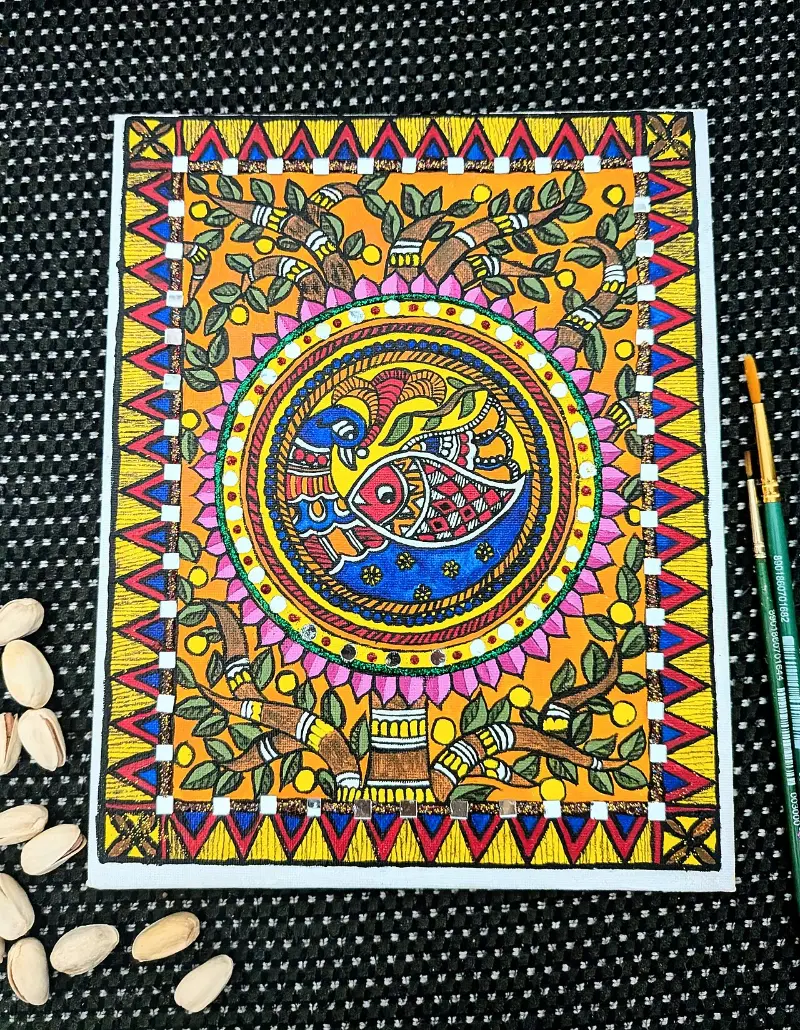
- Look Vivid colours, intricate designs, bold lines and geometric patterns
- Themes Gods, epics, nature, weddings, festivals and daily life
- Maithili art The wider tradition, with Madhubani as its most famous painted form
How did Madhubani painting become known beyond Mithila?
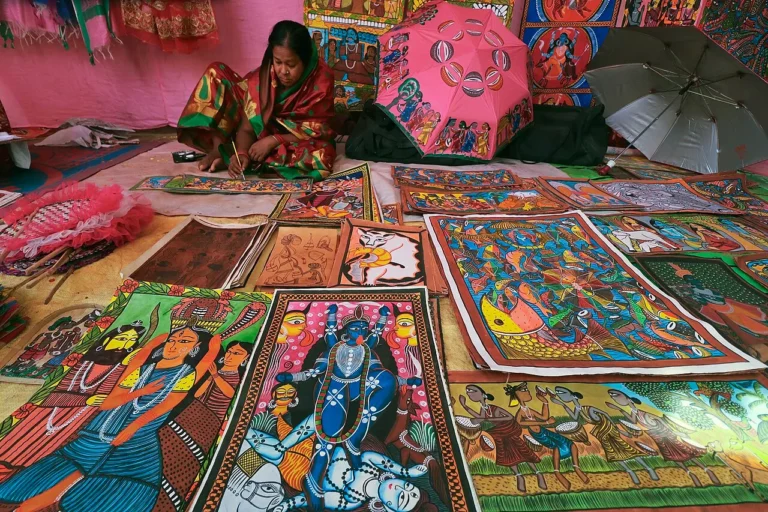
Madhubani painting, also called Mithila or Maithil painting, comes from the Mithila region of northern Bihar. For generations, women painted the inside walls of village homes with gods and goddesses, and with symbols linked to weddings and seasonal rituals, passing the skill down within families. Nobody knows exactly how old the tradition is, and no firm starting date has been established. Local belief links it to the wedding of Sita, but that is tradition, not documented history.
The wider world heard about it fairly recently. After a major earthquake struck the region in 1934, damaged houses exposed painted interior walls to a British official, William G. Archer, who was working in Madhubani district. He photographed many of them in the 1930s, and his 1949 article in the journal Marg was the first published account of the art.
The next big change came in the 1960s, when the paintings began to be made on paper so they could be sold. Accounts say this effort was encouraged by the All India Handicrafts Board during a drought, to give village families an income. Since then, artists such as Ganga Devi and Sita Devi have won national and international recognition, and Madhubani has become one of India’s best-known folk painting styles.
Timeline
How Madhubani became known
- Age unknown Nobody knows how old the tradition is. Local belief links it to the wedding of Sita, but that is tradition, not documented history.
- 1934 A major earthquake damages houses and exposes painted interior walls to British official William G. Archer.
- 1930s Archer photographs many of the walls.
- 1949 His article in the journal Marg becomes the first published account of the art.
- 1960s Paintings begin to be made on paper to be sold; accounts say the All India Handicrafts Board encouraged this during a drought.
What is Maithili art?
Maithili art is a tapestry woven from history, culture and spirituality. Its roots go back to ancient times in the Mithila region, where art was a way to communicate stories, beliefs and celebrations.
The tradition covers many forms, from wall paintings to music, dance, literature and sculpture. At its heart, Maithili art reflects the ethos of the people: their joys, struggles and aspirations.
What is Madhubani painting?
Madhubani painting stands at the forefront of Maithili art and has won admirers around the world. It is known for vivid hues, intricate designs and a variety of themes. It is more than decoration: it is a visual language that tells stories of gods and goddesses, the beauty of nature and human experience.
The bold lines and geometric patterns of this style reflect the precision of the artists and the timeless tradition behind their creativity.
What themes and motifs appear in Madhubani paintings?
Madhubani painting brings together many themes, each a window into the cultural and spiritual life of the region.
- Gods and epics: Hindu deities such as Krishna and Rama, and scenes from the Ramayana and Mahabharata.
- Nature: Animals, birds and plants woven into the design, celebrating harmony between people and the natural world.
- Life and celebrations: Marriage ceremonies, festivals and scenes from daily life, which make each painting a story in itself.
Themes
What Madhubani paintings show
- Gods and epics Hindu deities such as Krishna and Rama, and scenes from the Ramayana and Mahabharata.
- Nature Animals, birds and plants woven into the design, celebrating harmony between people and the natural world.
- Life and celebrations Marriage ceremonies, festivals and scenes from daily life, which make each painting a story in itself.
How is Madhubani art being preserved and reinvented?
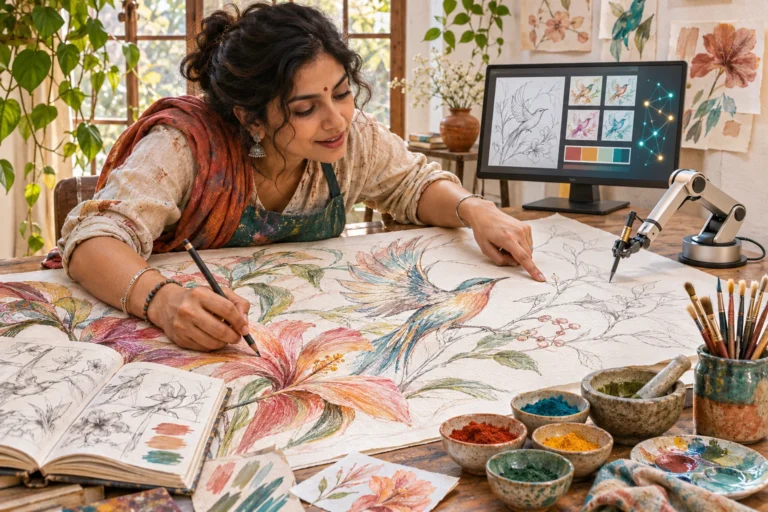
The story of Maithili art and Madhubani painting is not limited to the past. Contemporary artists are bringing new life to these traditions by adding modern sensibilities while staying true to their roots. Workshops, exhibitions and art platforms act as bridges between generations and help the legacy endure.
Madhubani painting has also moved beyond canvas. It now appears on apparel, home decor and even public spaces, and it resonates with people across cultures.
Why do Maithili art and Madhubani painting matter?
In Maithili art and Madhubani painting, brushstrokes are more than pigment on a surface. They reflect culture, guard history and carry stories. These art forms bind communities and generations together, and through their vibrant colours and intricate designs they remind us of the beauty of tradition and the universality of human emotion.
Frequently asked questions
How did Madhubani painting become known beyond Mithila?
Madhubani painting began as wall art made by women in Mithila, Bihar, and its exact age is unknown. A 1934 earthquake exposed painted walls to British official W. G. Archer, who photographed them and wrote about them in 1949. From the 1960s, paintings on paper were made for sale, which carried the art to wider audiences.
What is the difference between Maithili art and Madhubani painting?
Maithili art is the wider cultural tradition of the Mithila region, covering wall painting, music, dance, literature and sculpture. Madhubani painting is its most famous painted genre.
What are the main features of Madhubani painting?
Vivid colours, intricate designs, bold lines and geometric patterns, with a wide range of themes.
What subjects do Madhubani paintings show?
Hindu deities such as Krishna and Rama, scenes from the Ramayana and Mahabharata, animals, birds, nature, marriage ceremonies, festivals and daily life.
How is Madhubani painting kept alive today?
Contemporary artists add modern sensibilities while staying true to tradition, and workshops, exhibitions and art platforms connect generations. The style now also appears on apparel, home decor and public spaces.
Sources and further reading
Madhubani painting (Mithila painting) collection record, Victoria and Albert Museum.
Mithila painting (collection notes), Sainsbury Centre, University of East Anglia.
Madhubani Painting: A Historical Context, Folkartopedia (supporting only).
- Madhubani art, Wikipedia (in English)
Related reading
- Rediscovering the 9 un-sung art of India
- Venturing the Beauty of Warli Painting: A Cultural Heritage of Maharashtra
- Madhubani and Its Cousins: Folk Painting Traditions Around the World
Image credit: “Madhubani painting by Bhuvana Meenakshi” by Bhuvana Meenakshi, via Wikimedia Commons, licensed under CC BY-SA 3.0.