History of Pichkari (Water Syringe)
In short: The pichkari is the hand-held water squirter used to spray coloured water at Holi. Its exact origins are unclear, but it has been part of Holi for centuries, from bamboo and horn versions to the metal and plastic ones of today. Folk tradition links it to Lord Krishna and Radha, and royal courts in north India used ornate pichkaris, as surviving silver and metal examples from the late 18th to 19th century show.
At Holi, coloured water is sprayed from a pichkari, a hand-held squirter once made of bamboo or horn and now mostly of metal or plastic.
At a glance
The pichkari in brief
- What it is A hand-held device that squirts coloured water at Holi
- First made Nobody knows exactly when
- Traditional material Bamboo, though little evidence of the earliest forms survives
- Colour for the water Flowers or items like turmeric
- Later materials Metal, plastic or wood
- Folk link Tradition connects it with Krishna and Radha, not documented history
What is the history of the pichkari?
Nobody knows exactly when the first pichkari was made. The device is a simple syringe-like squirter for coloured water, and cheap ones of bamboo or similar materials rarely survive, so most of the physical evidence comes from fancier objects kept in museums.
Holi itself is old. Britannica says the festival probably has deep roots in ancient India and is mentioned in early texts, and notes that coloured water is squirted from water guns called pichkaris. The Victoria and Albert Museum shows 18th-century hill-court paintings from north India in which people spray each other with water dyed yellow with flowers of the tesu tree, and its blog also pictures a metal syringe from 19th-century Delhi.
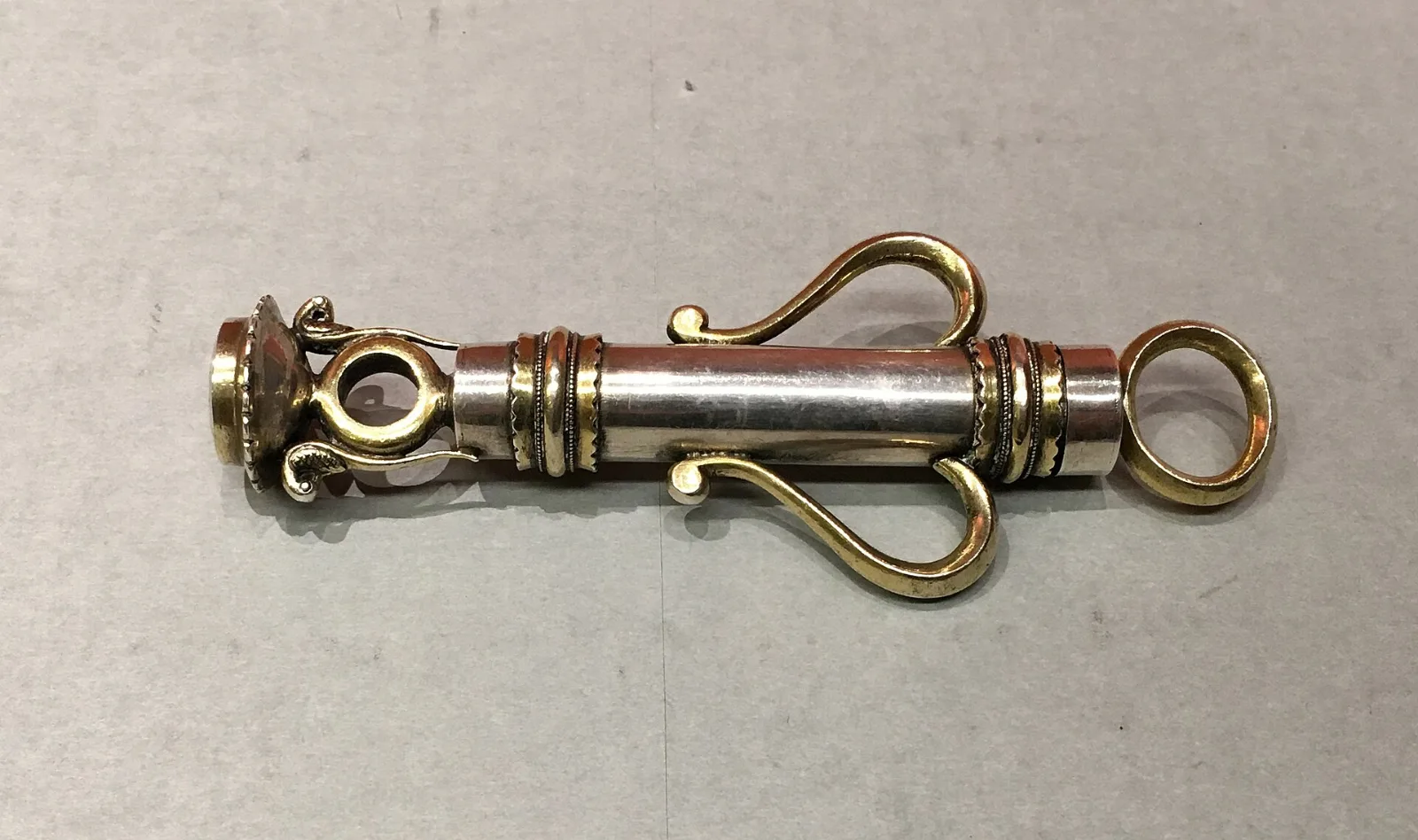
Museum pieces show how fancy the device could get. The Metropolitan Museum of Art holds a silver and gilded-silver pichkari made in the late 18th to mid 19th century, probably at Lucknow or another northern royal court. London’s Horniman Museum has a decorated metal one with an elephant-head nozzle. These are courtly versions of an everyday toy.
Tradition links Holi’s colour play with the young Krishna and Radha, and folk songs recall it. That is a beloved story, not a documented origin of the pichkari. What we can say with confidence is that the device was in use by at least the 1700s, and likely earlier.
Timeline
Pichkari in the record
- 18th century V&A shows hill-court paintings from north India in which people spray each other with water dyed yellow with tesu flowers.
- Late 18th to mid 19th century The Met holds a silver and gilded-silver pichkari, probably made at Lucknow or another northern royal court.
- 19th century The V&A blog pictures a metal syringe from Delhi.
What were pichkaris made of?
Bamboo pichkaris are traditional, but little evidence survives of the earliest forms, so their exact materials are not documented. The coloured water was made from flowers or items like turmeric.
Over time, pichkaris evolved and came to be made of metal, plastic or wood, in many shapes and sizes.
Materials
What pichkaris were made of
- Bamboo A traditional material, but little evidence survives of the earliest forms, so exact materials are not documented.
- Coloured water Made from flowers or items like turmeric.
- Metal, plastic, wood Over time pichkaris evolved into many shapes and sizes in these materials.
- Courtly versions Silver and metal pichkaris from the late 18th to 19th century show royal courts in north India used ornate ones.
What is the story of Krishna and the pichkari?
One popular story says that Lord Krishna started the tradition of using pichkaris at Holi. In this folk telling, Krishna was a mischievous child who loved to play pranks. He noticed that his beloved Radha felt shy about playing Holi with him, so he came up with a plan to throw coloured water on her using a bamboo stick with a small hole at one end, which he called a pichkari.
Radha was surprised and amused by the playful gesture, and soon they were splashing colours on each other with their pichkaris. This is a popular tradition and legend rather than a historically documented event.
Did royal families play Holi with pichkaris?
Royal courts in north India used ornate pichkaris, as surviving silver and metal examples from the late 18th to 19th century show.
Frequently asked questions
What is a pichkari?
A pichkari is a hand-held device used to squirt coloured water during Holi.
What is the history of the pichkari?
The exact origin is unknown. Pichkaris are mentioned by Britannica as part of Holi, and museums show them in 18th-century paintings and in silver and metal examples from the late 18th to 19th century. Bamboo ones rarely survive. The Krishna story is tradition, not documented history.
What were old pichkaris made from?
Bamboo pichkaris are traditional, but little evidence survives of the earliest forms, so their exact materials are not documented.
What did people use to colour the water?
Coloured water was made from flowers or items like turmeric.
What is the Krishna and Radha story about the pichkari?
In a popular folk story, Krishna used a bamboo stick with a small hole, called a pichkari, to throw coloured water at a shy Radha. It is a tradition, not a documented historical event.
Sources and further reading
Holi, Encyclopaedia Britannica.
The Festival of Holi, Victoria and Albert Museum.
Holi Syringe (Pichkari), 2019.149, The Metropolitan Museum of Art.
Pichkari, 26.1.52/8, Horniman Museum and Gardens.
- Holi, Wikipedia (in English)
- Holi, Encyclopaedia Britannica (in English)
Related reading
- Art as an Investment: Benefits, Risks and How to Start
- Dhokra Art: India’s 4,000-Year-Old Lost-Wax Metal Casting
- Dindigul Locks
Image credit: “Holi Syringe (Pichkari) MET LC-2019 149”, The Metropolitan Museum of Art, via Wikimedia Commons, released under CC0 1.0.