Negative Space in Art
In short: Negative space is the area around and between the subject of an artwork, also called white space or blank space. It matters as much as the subject itself, because it creates balance, contrast, movement, depth and simplicity. Understanding it helps painters, sculptors and photographers make stronger work.
Look at a favourite painting again and notice the empty parts. The area around and between the subject, called negative space, white space or blank space, matters as much as the subject itself. This article explains what negative space is and how it creates balance, contrast, movement, depth and simplicity, so painters, sculptors and photographers can make stronger work.
At a glance
Negative space in brief
- What it is The area around and between the subject of an artwork
- Also called White space or blank space
- Opposite Positive space, the area occupied by the subject
- In a mould The empty core, which is the negative space of the final artwork
- In sculpture Created around the work as stone or wood is carved away
- Useful for Painters, sculptors and photographers
Where does the idea of negative space come from?
Artists have always worked with the empty areas around and between forms, but no single person is known to have invented the idea or the term. Reference works such as the Getty vocabulary used by the Fitzwilliam Museum describe negative space as an enclosed empty space in architecture, sculpture or painting that contributes essentially to the composition. The idea grew from practice long before it had a name.
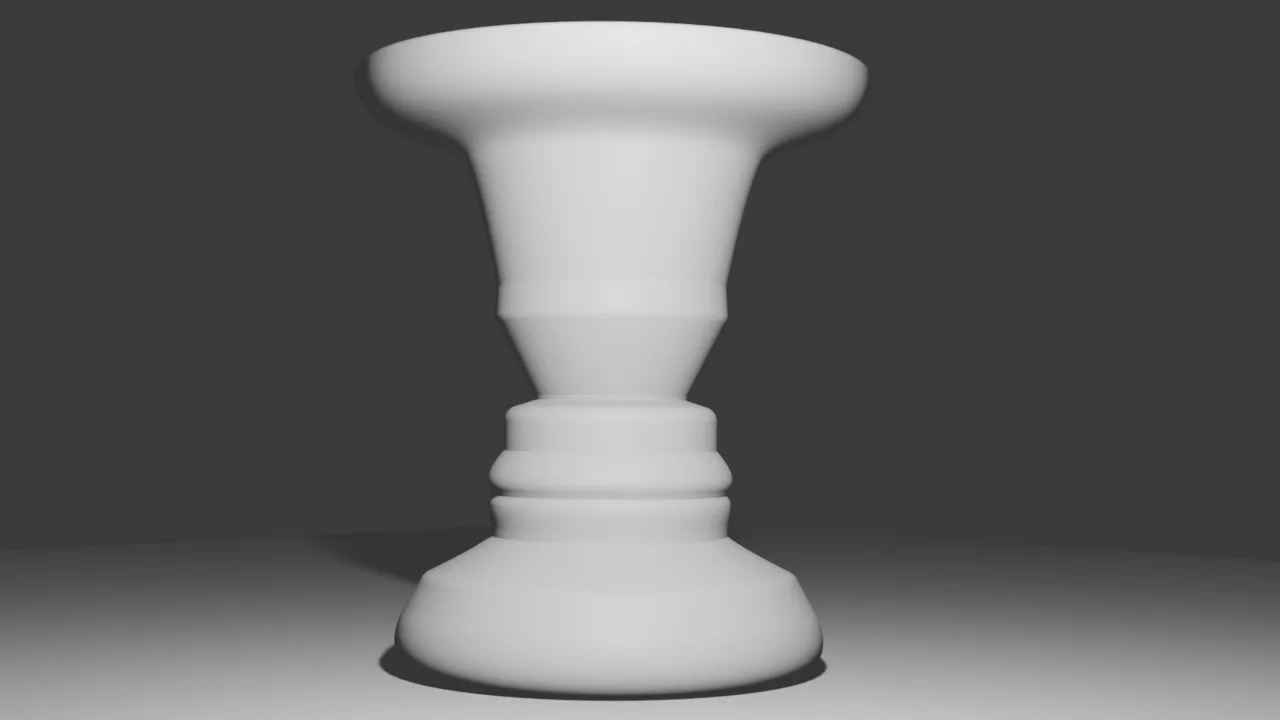
In the early twentieth century psychology gave it a firm footing. The Danish psychologist Edgar Rubin (1886-1951) defended his doctoral thesis, Synsoplevede Figurer (Visually Experienced Figures), at the University of Copenhagen in 1915. It introduced the distinction between figure and ground that artists now rely on. Rubin found that the figure tends to look closer and more memorable, while the ground seems more shapeless. The famous vase-or-two-faces image is named after him. Rubin was describing perception, not giving advice to painters.
Japanese aesthetics offers a parallel idea called ma, often translated as interval or the space in between. Scholars link it to Buddhist ideas of emptiness and find it in architecture, poetry, music, theatre and painting. Its exact origin is hard to date, and one scholar notes the term apparently came from China. In sculpture, Henry Moore wrote in 1951 that form and space are one, and he spent decades shaping holes as carefully as solids.
Key facts
Where the idea comes from
- 1915 Edgar Rubin’s thesis introduced the figure and ground distinction
- 1951 Henry Moore wrote that form and space are one
- Ma Japanese idea of the interval or space in between
What is negative space in art?
Negative space is the area surrounding an object or shape in a piece of artwork, and is also called “white space” or “blank space”. It is just as important as positive space, which is the area occupied by the subject of the work. Used well, negative space can create balance, contrast and harmony in a piece of art.
Space works in two ways. Something can be represented on a surface either by its presence or by its absence. You can exist in the world as a structure occupying space, or as an absence at the core of the things around you.
Where is negative space used in sculpture and moulds?
The idea is used in many kinds of artwork, including moulds and sculpture. In a mould, an empty core is created, which is essentially the negative space of the final artwork. In sculpture, the artist creates negative space around the work as stone or wood is carved away.
What does negative space do in a composition?
Artists use negative space in several ways.
- Balance: A balanced distribution of positive and negative space gives visual equilibrium that is pleasing to the eye. A painting with a large object on one side can be balanced by leaving more negative space on the other side.
- Contrast: Placing a dark object against a light background, or the reverse, draws attention to the subject and makes it stand out.
- Movement: Negative space can suggest motion and energy and create a dynamic composition, as seen in many abstract paintings.
- Depth: By shaping the space around an object, artists can create an illusion of depth. For example, objects in the foreground against a sparse background draw the eye and give a sense of three dimensions.
- Simplicity: Negative space can create a minimalist composition that feels elegant and simple, often seen in modern art.
What it does
Five jobs of negative space
- Balance A large object on one side can be balanced by leaving more negative space on the other side.
- Contrast A dark object against a light background, or the reverse, draws attention to the subject.
- Movement It can suggest motion and energy, as seen in many abstract paintings.
- Depth Shaping the space around an object can create an illusion of depth.
- Simplicity It can create a minimalist composition that feels elegant and simple, often seen in modern art.
Why should every artist understand negative space?
Painters, sculptors and photographers all work with it. Planning the empty parts as carefully as the subject helps any of them make a stronger composition.
Frequently asked questions
What is negative space in art?
It is the area surrounding an object or shape in an artwork, also called white space or blank space.
Where does the idea of negative space come from?
No one person invented it. Artists worked with empty space long before the term existed. In 1915 Danish psychologist Edgar Rubin described the figure and ground distinction behind the famous vase-or-faces image, and Japanese aesthetics has a related idea called ma. Sculptors like Henry Moore also treated space as part of the form.
How is negative space different from positive space?
Positive space is the area occupied by the subject of the work, while negative space is the area around it.
How is negative space used in sculpture?
The artist creates negative space around the sculpture as the stone or wood is carved away.
What can negative space add to a painting?
It can add balance, contrast, movement, depth and a minimalist simplicity.
Is negative space only for painters?
No. Painters, sculptors and photographers can all use it to make stronger work.
Sources and further reading
Looking back: Figure and ground at 100, The Psychologist, British Psychological Society.
Edgar Rubin, Lex.dk (Den Store Danske).
Ma: a religio-aesthetic paradigm (Pilgrim), Asian Studies Review / University of Sydney open journals.
Henry Moore: Some Notes on Space and Form in Sculpture, Tate.
- Negative space, Wikipedia (in English)
- Figure-ground (perception), Wikipedia (in English)
Related reading
- Abstract Art: How Shapes, Colours and Emotions Work
- Krishna Art: The 16 Kalas and 13 Famous Artworks.
- Indian Art Auctions: Why Bid Values Keep Rising
Image credit: “Rubin vase” by PaoloGonzalez, via Wikimedia Commons, licensed under CC BY 4.0.