Guernica by Pablo Picasso: History, Composition and Symbolism
In short: Guernica is Pablo Picasso’s 1937 mural-sized painting, made in response to the bombing of the Basque town of Guernica during the Spanish Civil War. Painted only in black, white and grey, it shows terrified people and animals in a fractured composition. It is widely seen as one of the most powerful anti-war statements in art.
Pablo Picasso painted “Guernica” in Paris in 1937, weeks after German and Italian aircraft bombed the Basque town of Gernika during the Spanish Civil War. The huge canvas, in black, white and grey, shows people and animals caught in that kind of attack. Here we look at its history, its composition and its meaning.
At a glance
Guernica in brief
- Artist Pablo Picasso
- Year 1937, painted in Paris
- Size About 3.5 by 7.5 metres
- Colours Black, white and grey only
- Response to The bombing of the Basque town of Gernika during the Spanish Civil War
- Now at Museo Reina Sofía, Madrid, since 1992
What is the history of Guernica?
Pablo Picasso painted Guernica in Paris in 1937, during the Spanish Civil War. Representatives of the Spanish Republic had asked him to make a large mural for their pavilion at the Paris International Exhibition, and he accepted in January 1937, though at first he had no fixed subject in mind.
On 26 April 1937 the Basque town of Gernika, known in Spanish as Guernica, was bombed by German and Italian aircraft fighting alongside Franco’s forces. News of the attack shaped the work that followed. Picasso began on 1 May in his studio on the rue des Grands-Augustins, and the large canvas, about 3.5 by 7.5 metres, was painted in roughly five weeks, finished in early June. It is in grey, black and white.
The painting was first shown to the public on 12 July 1937, when the Spanish pavilion opened at the Paris exhibition. Afterwards it toured to raise funds for the Republic, and in 1939 it went to the Museum of Modern Art in New York, where it stayed for decades. It came to Spain in 1981, was shown at the Casón del Buen Retiro near the Prado, and since 1992 has hung in the Museo Reina Sofía in Madrid. A tapestry copy hangs at the United Nations in New York. Today it is widely read as a statement against the horrors of war.
Timeline
How Guernica came to be
- January 1937 Picasso accepts the Spanish Republic’s request for a large mural for its pavilion at the Paris exhibition.
- 26 April 1937 German and Italian aircraft bomb the Basque town of Gernika.
- 1 May to early June 1937 Picasso paints the canvas in roughly five weeks, in his Paris studio.
- 12 July 1937 First shown to the public when the Spanish pavilion opens.
- 1939 The painting goes to the Museum of Modern Art in New York, where it stays for decades.
- 1981 and 1992 It comes to Spain in 1981, and has hung in the Museo Reina Sofía in Madrid since 1992.
What does the composition look like?
“Guernica” is a complex, emotionally charged work, painted in shades of black, white and grey. Its composition is jumbled and fractured, with distorted human and animal forms. In the middle, a terrified horse is falling in agony, while a bull, often seen as a symbol of Spain, also appears distressed.
The human figures are contorted and anguished, with gaping mouths and distorted limbs. A mother holds her lifeless child and a fallen soldier lies broken. The chaos and fragmentation of the picture reflect the chaos and horror of war itself.
What do the symbols in Guernica mean?
“Guernica” is rich in symbolism and open to interpretation, and critics have read it in many different, sometimes conflicting, ways. Some of the elements most often discussed are:
- The lamp: held by a woman at the window, often read as a sign of hope amid darkness.
- The eye-shaped light: a bare bulb shaped like an eye above the horse, which suggests watching and accountability.
- The broken sword: held by the fallen soldier, with a flower growing from it, often read as the futility of violence.
- The flames: evoke destruction and suffering.
Symbols
What critics read in Guernica
- The lamp Held by a woman at the window, often read as a sign of hope amid darkness.
- The eye-shaped light A bare bulb shaped like an eye above the horse, suggesting watching and accountability.
- The broken sword Held by the fallen soldier, with a flower growing from it, often read as the futility of violence.
- The flames They evoke destruction and suffering.
Why does Guernica still matter?
One of the most haunting things about “Guernica” is how it conveys the universality of human suffering. Although it responded to a specific event, its themes of violence, suffering and the human condition speak to people around the world.
Picasso made “Guernica” about one bombing, but it has come to stand against war in general. It shows the suffering that violence causes, it is often read as a call for peace, and it is one of the clearest examples of a painting bearing witness to a real event.
Frequently asked questions
Who painted Guernica and when?
Pablo Picasso painted it in 1937, in response to the bombing of the Basque town of Guernica during the Spanish Civil War.
What is the history of Guernica?
Picasso accepted a request from Spanish Republic representatives in January 1937 to paint a mural for the Paris exhibition. After the bombing of Gernika on 26 April 1937, he painted it between May and early June, and it was first shown on 12 July 1937. It has been in Madrid since 1981 and in the Reina Sofía since 1992.
What does Guernica show?
A jumbled, fractured scene of distorted people and animals in agony, including a horse, a bull, a mother holding her dead child and a fallen soldier.
Why is Guernica painted in black, white and grey?
The painting is monochromatic, in shades of black, white and grey. This gives it a stark look that suits its grim subject.
What do the symbols in Guernica mean?
They are open to interpretation. The lamp is often read as hope, the eye as watching and accountability, the broken sword as the futility of violence and the flames as destruction.
Why is Guernica considered an anti-war painting?
Because it shows the brutality of war and the suffering it inflicts on ordinary people, and it speaks to violence and the human condition everywhere.
Sources and further reading
80 years since its Expo 1937 debut, Guernica’s message still resonates, Bureau International des Expositions (BIE).
Guernica (exhibition and press kit), Musée national Picasso-Paris.
Guernica exhibition page, Musée national Picasso-Paris.
Related reading
- Raja Ravi Varma: The Master of Indian Art
- Shadanga – Principles of Painting
- Krishna Art: The 16 Kalas and 13 Famous Artworks.
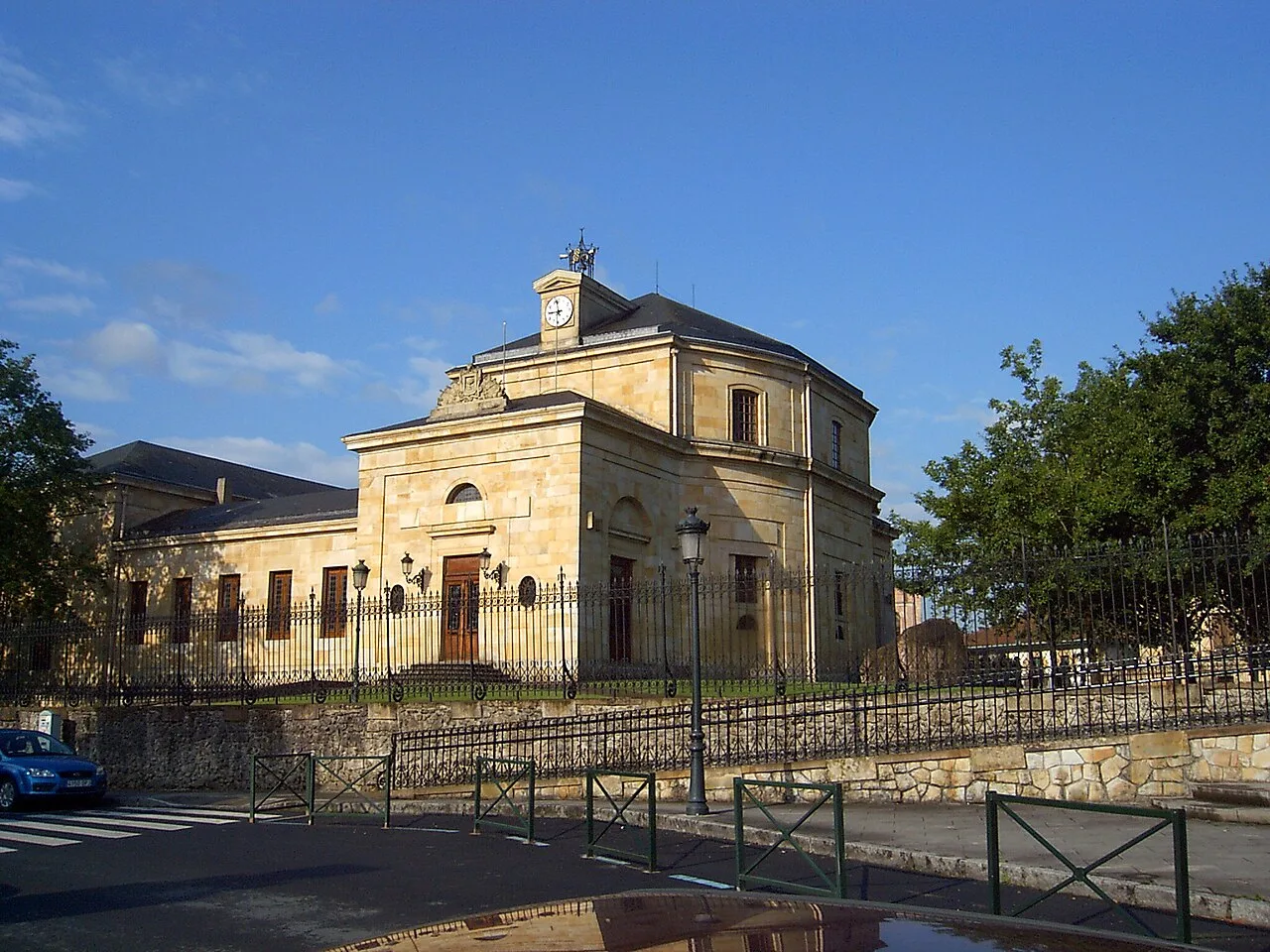
Image credit: “Gernika batzar nagusiak1” by Telle, via Wikimedia Commons, licensed under CC BY-SA 3.0.