Thangka Painting in Sikkim: Buddhist Scroll Art
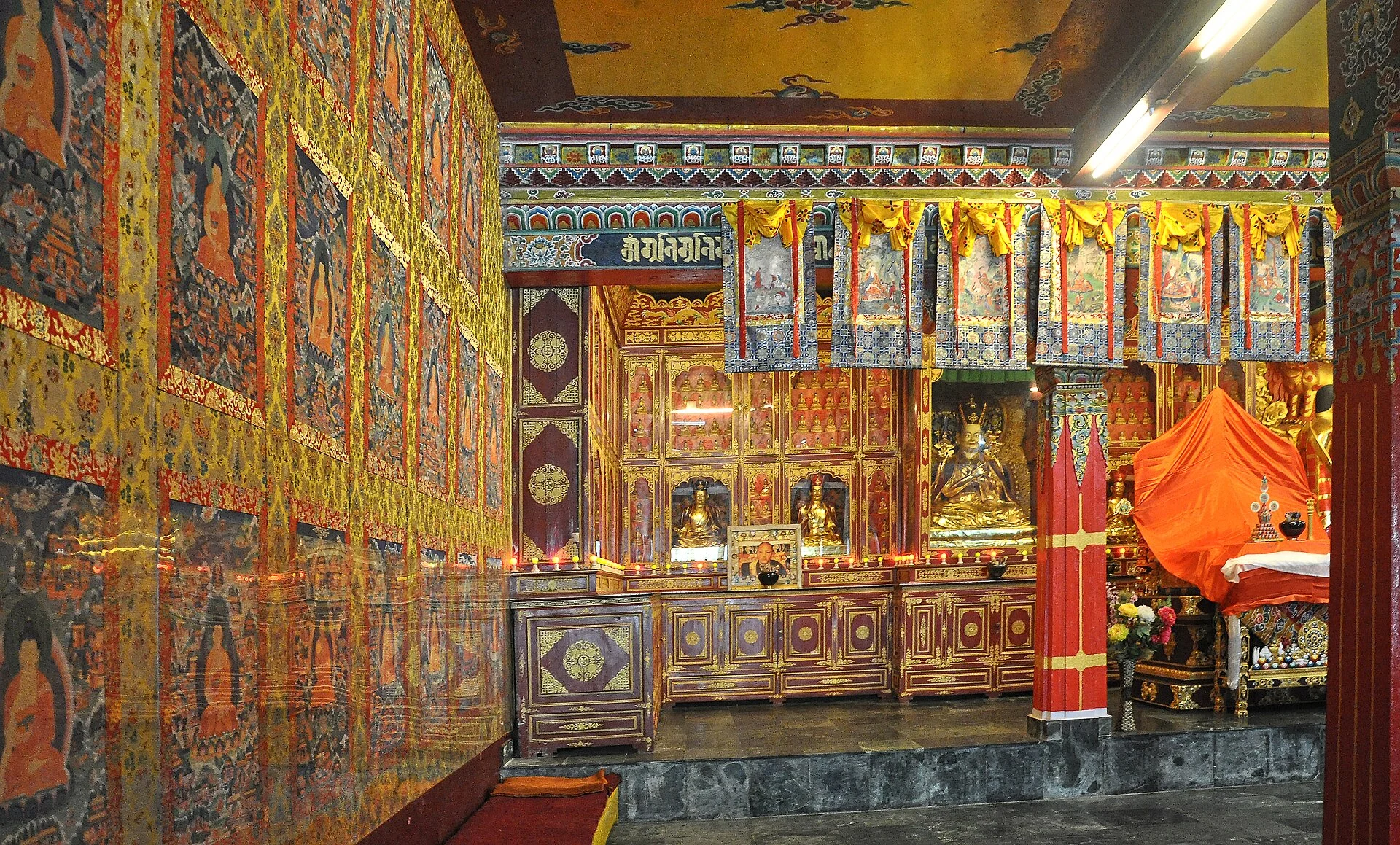
TL;DR: A thangka is a Buddhist scroll painting made on cloth with mineral colours and often gold, following strict rules for how figures are drawn. The art form is very old and began outside Sikkim, in Nepal and Tibet. It came to Sikkim with Tibetan Buddhism and hangs in monasteries and home shrines there, and a government study describes the local training tradition as roughly eighty years old, built on teachers from Tibet. Only a small number of the people trained in it paint regularly today, and cheaper machine-made scrolls are a worry for them.
In this article
- What a thangka is, and where it hangs in Sikkim
- Where thangka painting began
- How thangka reached Sikkim, and who taught it locally
- Cloth, glue and mineral colours
- How a thangka is made, step by step
- Figures and symbols, in general terms
- What is changing today, and what keeps it alive
- Frequently asked questions
- Sources and further reading
What a thangka is, and where it hangs in Sikkim
Painting a single flower on a traditional thangka can take three to seven days. That detail comes from a 2011 study for India’s Ministry of Textiles on the craft in Sikkim, and it shows the scale of patience involved. A thangka is a painted scroll, usually of a Buddhist deity, an idea or a sacred event, made on prepared cloth and mounted in silk brocade so it can be hung and rolled up.
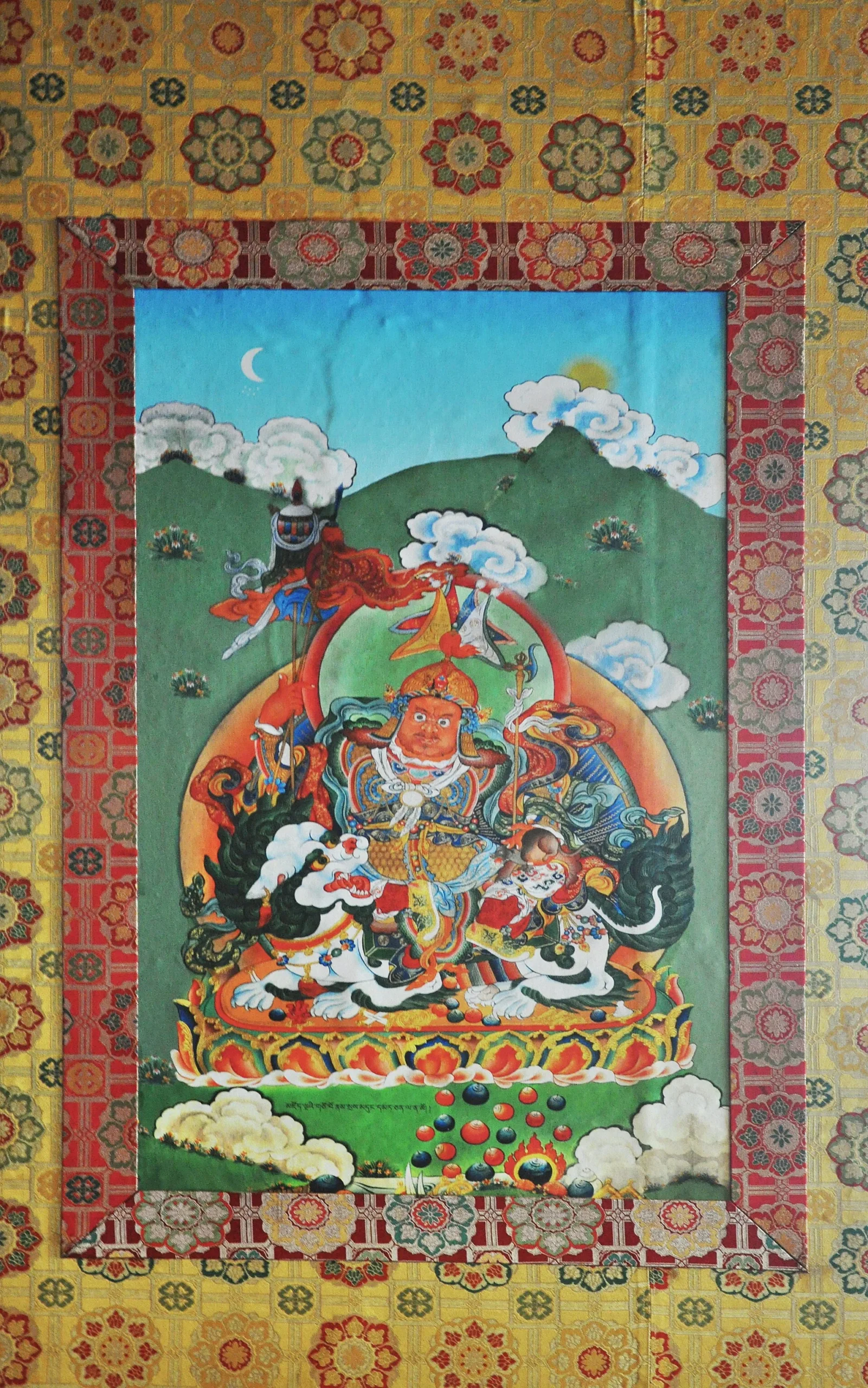
Google Arts and Culture, in a story from a Gangtok craft project, says thangkas are treated as religious objects rather than decoration. They help with meditation, and in Sikkim they are often commissioned at births and especially at deaths. It also notes that every Buddhist household in Sikkim keeps a shrine, where family images and thangkas are placed. The same imagery appears much larger on monastery walls, painted on earthen plaster smoothed with gypsum or white clay.
The tradition is often said to have begun in seventh-century Nepal and spread across the Himalayas. Sikkim was a Buddhist monarchy until 1975, with close ties to Tibet, and its thangkas follow the Tibetan style while sometimes showing local figures, as the later sections explain.
Where thangka painting began
Thangka is a very old art form, and it did not begin in Sikkim. The word comes from Classical Tibetan and means a thing that is unrolled. The form grew up alongside the wall paintings of Tibetan Buddhism. Wikipedia’s account traces it to the Newar painters of Nepal’s Kathmandu valley, where the same kind of painting is called paubha, and says Nepalese artists carried their painting, metalwork and Buddhist manuscripts into Tibet. The figures remain close to Indo-Nepalese models, and Chinese influence on backgrounds grew from about the 14th century.
Because paintings on cloth are fragile, few early ones survive, and sources give different starting points. The oldest surviving cloth paintings in a Tibetan style come from the Mogao caves at Dunhuang in China and are dated to about 781 to 848. Thangkas that are certainly from Tibet itself survive from the 11th century, and the earliest surviving Nepalese ones date to about the 14th century. One Google Arts and Culture story places the origin of the art form in Nepal as early as the 7th century. When we say below that Sikkim’s tradition is about eighty years old, we mean the local training tradition, which is one branch of a much older Himalayan Buddhist art.
How thangka reached Sikkim, and who taught it locally
Thangkas came to Sikkim with Tibetan Buddhism. Sikkim’s first Chogyal, Phuntsog Namgyal, was consecrated in 1642 by three lamas, and the monarchy lasted until 1975. Monasteries and home shrines have been the main places where thangkas hang. The sources we found do not say when the first thangka was painted or hung in Sikkim, so we do not give a date for that.
The government study puts Sikkim’s own thangka tradition at about eighty years, and says four artists from Tibet painted the royal palace in the 1930s. Rinzing Larippa from Temi in South Sikkim, who began there as an apprentice, became the first official trainer at an institute that is now the state’s Directorate of Handicrafts and Handloom. His best student, Ganden Larippa, led it until 1993, and Nima Tshering Bhutia is named as a later trainer.
Dates differ between sources. The Google Arts and Culture story shows thangkas by Rinzing Lharipa dated 1910 and 1919, and it says Nima Tshering Bhutia received a National Award in 1994. Because the spellings and start dates do not match, we treat the eighty-year figure as the study’s estimate, not a settled fact. The study also describes private teaching lines started in the late 1950s by Phuntsok Sangpo, carried on by his successors in Namchi and Gangtok.
Cloth, glue and mineral colours
According to the study, the traditional surface is cotton stretched on a bamboo and wooden frame and coated many times with white clay and glue. Silk is preferred for costly pieces, though most work now uses poplin, a plain cotton-blend cloth. The traditional glue is made from yak skin. A national handicrafts page on thangka similarly lists prepared cloth, a base coat, natural colours and a glass or porcelain tool for polishing the base.
Colours are traditionally mineral and earth based. The study lists lime white, vermilion, indigo and blue from lapis lazuli among them, with white, yellow, red, blue and green as the five basic colours. Google Arts and Culture adds that gold dust is used, and that one 1919 mandala used powdered gemstones. Gold is used sparingly: the study says up to about five grams per painting.
The study reports that most artists now buy chemical colours, which it says can fade within months to years, while stone and clay colours have lasted for centuries. That comparison comes from one source, so read it as a reported view. Brushes were traditionally made from grass and animal hair.
How a thangka is made, step by step
The study sets out a traditional sequence that begins with a request from a believer, made with a lama’s guidance. The artist is expected to be disciplined and devout. The national handicrafts page agrees on the broad outline of cloth preparation, base coat, polishing, a drawing guided by grids, and then colour. Times below are the study’s figures for the traditional way.
- Prepare the cloth with clay and glue, traditionally over about 14 to 20 days.
- Draw the outline in pencil and then black ink, using fixed proportions, which can take 10 to 30 days.
- Grind and prepare the five basic colours.
- Paint from top to bottom, with the sky first.
- Add fine details, then shading, then gold.
- Paint in the eyes of the figure, described as the most important step, after offerings.
- Frame in brocade and, where needed, have the work consecrated by a respected master.
The study adds that Buddha figures follow set measurements, such as a face being a fixed number of units and the body ten face lengths. The point is that the painter follows a text-based pattern instead of freehand invention.
Figures and symbols, in general terms
Google Arts and Culture explains several common subjects. Shakyamuni Buddha is shown with a right hand pointing to the earth, a gesture linked to the moment of his enlightenment. Tara, a female deity of compassion, appears in white and green forms. The Wheel of Life shows a pig, a rooster and a snake at its centre, standing for ignorance, greed and anger or aggression.
What makes Sikkim distinctive is local content. The same source describes a Sikkim thangka of the founding of the kingdom, showing the mountain deity Kanchendzonga on a snow lion and the protector Mahakala on a black horse. It calls this blend of Tibetan style with local figures a feature of Sikkim’s Buddhism.
- The eight auspicious symbols, listed by the national handicrafts page, include the lotus, the parasol, the conch, the endless knot and the dharma wheel.
- The brocade border colours carry meanings: red for lamas, yellow for the Buddha, blue for eternity, per Google Arts and Culture.
- Faces of images are said to stay covered in some cases until a lama consecrates them.
What is changing today, and what keeps it alive
The 2011 study counted about 500 trained people in Sikkim but only about 40 painting regularly. In its survey, most artists had learned at private centres, and most had no students at the time. It names raw materials and low demand as the main problems, and says nearly all artists see mechanised thangkas, mostly from Nepal, as a threat. These figures are over a decade old, so current numbers may differ.
The study found about nine in ten customers were within Sikkim, mostly for religious reasons, and that the word thangka now also covers scenic scroll paintings with landscapes. Preservation of old thangkas was not covered by the sources we opened, so we say nothing about conservation methods. The study’s own advice was shared colour and canvas workshops and better training in finance and marketing.
Related stories
- Pichwai Paintings
- Hand-Painted or Printed? How to Tell an Original Indian Folk Painting from a Print
- What Makes A Painting Expensive?
- Rediscovering the 9 un-sung art of India
Frequently asked questions
What does thangka mean?
It is a Tibetan-origin word for a painted scroll, usually religious. The 2011 study notes the word now sometimes covers any scroll painting, including landscapes.
Are Sikkim thangkas painted with real minerals and gold?
Traditionally yes, according to the study and Google Arts and Culture. Many artists now use chemical colours, so the materials can differ from one piece to the next.
How long does one take?
The study’s traditional steps add up to many weeks or months. An early twentieth-century example is said to have taken a few months.
Where are thangkas used in Sikkim?
In monasteries, in home shrines, and on occasions such as births and deaths, as described by Google Arts and Culture.
Sources and further reading
- Office of the Development Commissioner (Handicrafts): Status Survey on Thangka Paintings in Sikkim (2011), Study Report
- Google Arts and Culture: Sikkimese Thangkas, Religious Art
- Google Arts and Culture: Buddhist Art in Sikkim
- Google Arts and Culture: Thangka exhibit, Sikkim
- Development Commissioner (Handicrafts): Thanka Painting
- Wikipedia, “Thangka” (origin of the art form, paubha, earliest surviving examples).
- Google Arts and Culture, “The Religious Art of Sikkimese Thangkas” (Sikkim’s first Chogyal, 1642; thangkas in Sikkimese homes).
Image credit: Opening image, “Thangkas at Ralang Monastery” by Prof Ranga Sai, via Wikimedia Commons (file page), released under CC0 1.0.
Image credit: What a thangka is, “Thangka at Ralang Monastery Sikkim” by Prof Ranga Sai, via Wikimedia Commons (file page), licensed under CC BY-SA 4.0.