Underrated Indian Arts: 13 Paintings and Crafts You Should Know
In short: India has many regional art forms that deserve more attention, from Odisha’s Pattachitra and Maharashtra’s Warli to Kerala’s Aranmula Kannadi metal mirrors. This guide introduces 13 of them, including paintings, textiles, metalwork and wood carving. Each one has its own style, story and tradition, passed down through generations.
Odisha’s Pattachitra, Maharashtra’s Warli and Kerala’s Aranmula metal mirrors are art forms that many people have never heard of. India has many such regional arts that deserve more attention. This article introduces 13 of them, from paintings and textiles to metal and wood work, each with its own style, story and tradition.
They are grouped below into paintings and crafts, with the state for each.
Which underrated Indian paintings should you know?
These painting traditions each tell stories in a very different way.
West Bengal: Kalighat Pattachitra
Kalighat painting is a distinct style that emerged in the 19th century near the Kalighat temple in Kolkata. It grew out of the older scroll-painting (pata) tradition and was done on cloth and, later, on paper. The paintings show Hindu deities, mythological characters and scenes from everyday life.
Madhya Pradesh: Bhil art
Bhil art is an indigenous tribal art form practised by the Bhil community. The paintings, traditionally done on mud walls and now also on canvas, depict folklore, mythology and reverence for nature. Bhil art is known for bold lines, geometric patterns and bright colours.
Odisha: Pattachitra
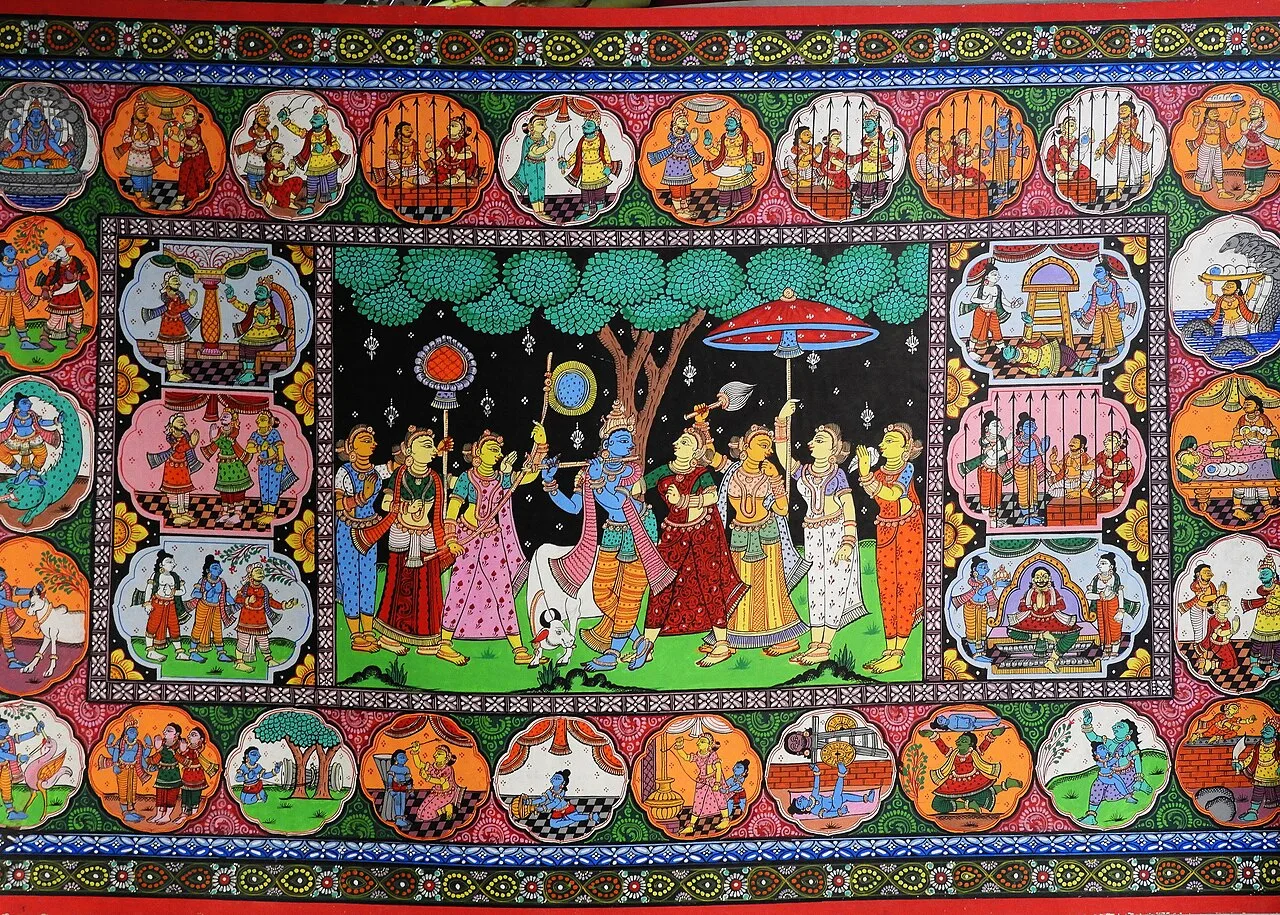
Odisha’s Pattachitra is known for its detailed portrayal of Hindu gods and goddesses, particularly those linked to the Jagannath tradition. These colourful paintings are done on cloth or specially prepared canvas using natural colours and minerals. The narratives draw on epics such as the Mahabharata and Ramayana.
Maharashtra: Warli art
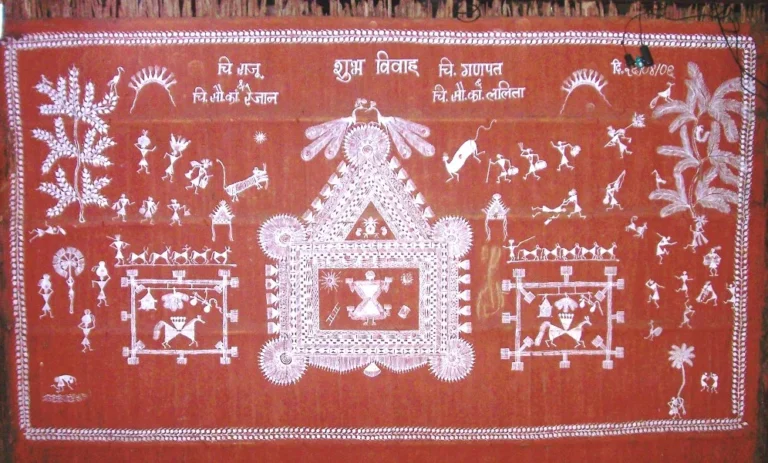
Warli art is a tribal art form practised by the Warli people. Its minimal yet expressive paintings use white figures on a red or earthy background to show daily life, hunting, farming and the community’s deep connection with nature. Warli art is known for its simplicity and rhythm.
Tamil Nadu: Tanjore (Thanjavur) painting
Tanjore paintings use deep colours, gold leaf work and inlaid glass beads or stones. They typically depict Hindu gods and goddesses, especially from the South Indian tradition. The style flourished under the patronage of the Nayaks and, above all, the Marathas of Thanjavur, and it holds a Geographical Indication (GI) tag.
Himachal Pradesh: Thangka paintings
Thangka paintings are Tibetan Buddhist paintings that depict deities, mandalas (sacred diagrams) and scenes from Buddhist scriptures. Traditionally made on cloth, they are known for bright colours and fine detail.
Rajasthan: Phad paintings
Phad paintings are large narrative scrolls, traditionally used by wandering bards (bhopas), that show stories from local folklore and epics. They are known for bold colours and dramatic compositions.
Paintings
Six painting traditions
- Kalighat (West Bengal) Emerged in the 19th century near the Kalighat temple in Kolkata, grown out of the older pata scroll tradition.
- Bhil art (Madhya Pradesh) Tribal paintings, traditionally on mud walls and now also on canvas, with bold lines and geometric patterns.
- Pattachitra (Odisha) Finely detailed Hindu deities, particularly from the Jagannath tradition, in natural colours and minerals.
- Warli (Maharashtra) White figures on a red or earthy background, known for simplicity and rhythm.
- Tanjore (Tamil Nadu) Deep colours, gold leaf and inlaid glass beads or stones; it holds a GI tag.
- Phad (Rajasthan) Large narrative scrolls, traditionally used by wandering bards called bhopas.
Which underrated Indian crafts and traditions should you know?
The crafts below cover textiles, monastery arts, metalwork, temple architecture and wood.
Uttar Pradesh: Chikan embroidery
This delicate embroidery style from Lucknow involves fine white-on-white threadwork on fabrics such as muslin. Chikan embroidery is used for clothing, scarves and home furnishings.
Assam: Sattriya traditions
Sattriya is best known as a classical dance form, but it comes from the Vaishnava monasteries (sattras) of Assam, which also nurtured other arts such as mask-making and illustrated manuscripts. This tradition is centred on devotion to Krishna.
Chhattisgarh: Dhokra metal casting
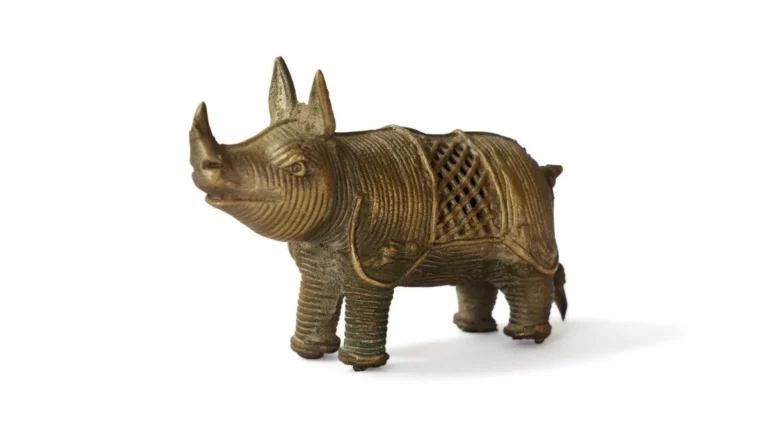
This ancient craft uses the lost-wax technique to make detailed figurines and sculptures from brass, bronze or bell metal. Dhokra art typically depicts tribal deities, animals and scenes from daily life. It is also practised in other states, such as Odisha, West Bengal and Jharkhand.
Gujarat and Rajasthan: Maru-Gurjara architecture
Maru-Gurjara is a style of temple architecture that developed in Gujarat and Rajasthan between the 11th and 13th centuries under the Chaulukya dynasty. It is known for finely carved stonework and is still used in many Jain temples.
Kerala: Aranmula Kannadi (metal mirror)
Aranmula Kannadi is a handmade mirror made from a bronze alloy of copper and tin. It is a front-surface mirror, so it reflects from the polished metal itself and avoids the double images of ordinary glass mirrors. The skills are handed down through families of artisans in Aranmula, and the craft has a GI tag.
Karnataka: Mysore sandalwood carving
Fragrant sandalwood from Karnataka is used to carve detailed figures of deities, mythological characters and everyday objects. These carvings are prized for their delicate craftsmanship and their aroma.
Crafts
Six crafts and traditions
- Chikan (Uttar Pradesh) Delicate white-on-white threadwork from Lucknow on fabrics such as muslin.
- Sattriya (Assam) Best known as a classical dance form, it comes from Vaishnava monasteries that also nurtured mask-making and illustrated manuscripts.
- Dhokra (Chhattisgarh) Lost-wax casting of figurines from brass, bronze or bell metal; also practised in Odisha, West Bengal and Jharkhand.
- Maru-Gurjara (Gujarat and Rajasthan) A temple architecture style from the 11th to 13th centuries under the Chaulukya dynasty, known for finely carved stonework.
- Aranmula Kannadi (Kerala) A handmade bronze-alloy front-surface mirror that avoids the double images of glass mirrors; it has a GI tag.
- Sandalwood carving (Karnataka) Detailed carvings of deities and everyday objects, prized for craftsmanship and aroma.
Where can you learn more?
These 13 are only a sample. The sources below cover some of them in more depth, and other Indian states have lesser-known crafts of their own.
Key facts
The list in numbers
- 13 Regional art forms introduced in this guide
- 11th-13th century When Maru-Gurjara temple architecture developed
- 19th century When Kalighat painting emerged near Kolkata
Frequently asked questions
What are some underrated Indian art forms?
Examples include Kalighat painting, Bhil art, Odisha Pattachitra, Warli art, Tanjore painting, Thangka, Phad paintings, Chikan embroidery, Dhokra metal casting, Aranmula Kannadi and Mysore sandalwood carving.
What is Warli art known for?
Warli art is a tribal art form from Maharashtra. It uses simple white figures on a red or earthy background to show daily life, hunting, farming and nature, and is known for its simplicity and rhythm.
What makes Tanjore painting special?
Tanjore paintings are known for deep colours, gold leaf work and inlaid glass beads or stones. They mostly depict Hindu deities and flourished under the Nayaks and Marathas of Thanjavur.
What is Aranmula Kannadi?
It is a handmade metal mirror from Aranmula in Kerala, made from a bronze alloy. It reflects from the polished metal surface, so it avoids the double image of glass mirrors.
What is Dhokra art?
Dhokra is an ancient metal-casting craft that uses the lost-wax technique to make figurines of brass, bronze or bell metal, often showing tribal deities, animals and daily life.
Sources and further reading
Related reading
- Bengali Patachitra: Scroll Painting and Song of West Bengal
- Warli Painting: Tribal Wall Art of Maharashtra
- Kalighat Painting: Bengal’s 19th-Century Temple and Satire Art
Image credit: “Odisha Pattachitra DSCN1052 09” by Sumita Roy Dutta, via Wikimedia Commons, licensed under CC BY-SA 4.0.