Mural
In short: A mural is a painting made directly on a wall, ceiling or other permanent surface. Murals go back tens of thousands of years to cave paintings, and India has a long tradition of them in caves, temples and palaces, such as Ajanta. Today murals are also a big part of public street art and activism.
Some of the oldest paintings we know were never hung in a frame; they were made straight onto cave walls. A mural is a painting made directly on a wall, ceiling or other permanent surface. This article follows murals from cave paintings and Indian caves like Ajanta to today’s street art, and shows which cities are famous for them and how murals are used in India now.
The word mural comes from the Latin muralis, meaning “of a wall”, which is related to murus, “wall”.
At a glance
Murals in brief
- What it is A painting made directly on a wall, ceiling or other permanent surface
- Word origin Latin muralis, meaning of a wall
- Oldest examples Chauvet cave paintings in France, roughly 30,000 to 32,000 years old, according to UNESCO
- Famous Indian sites Ajanta Caves, Ravan Chhaya Rock Shelter and the Kailasanatha temple at Ellora
- City of murals Philadelphia, often described that way, with thousands of murals
- Today Street art and activism, including in Indian cities
What is the history of murals?
Painting on walls is one of the oldest things humans do. UNESCO describes the paintings in France’s Chauvet cave as roughly 30,000 to 32,000 years old, a range confirmed by radiocarbon dating. Those images, mostly animals such as mammoths, cave lions and bison, were painted on the cave walls themselves, so they are among the earliest known wall art.
In ancient Egypt, officials’ tombs near Thebes (modern Luxor) were decorated with painted scenes between roughly 2000 and 1100 BCE, according to the Metropolitan Museum of Art. In the early 1900s the museum’s team made life-size copies of about 350 of these paintings, which today help us see colours that have since faded or been damaged.
India has its own long tradition. UNESCO says the Ajanta caves were made in two phases: an early one in the 2nd–1st centuries BCE, where paintings are sparse, and a later one in the 5th–6th centuries CE, when the walls were covered with fine murals. Britannica gives a wider span for the caves, from the 1st century BCE to the 7th century CE. At Ellora, UNESCO notes that the ceilings of the Kailasa temple’s front hall preserve remains of paintings from different periods.
These are only a few well-documented examples, not a full timeline. Murals appeared in many places, and the earliest ones are far older than any written record.
Timeline
Murals through time
- c. 30,000 to 32,000 years ago The Chauvet cave paintings in France, mostly animals, dated by radiocarbon according to UNESCO.
- c. 2000 to 1100 BCE Officials’ tombs near Thebes in ancient Egypt were decorated with painted scenes, according to the Met.
- 2nd to 1st centuries BCE The early phase of the Ajanta caves, where paintings are sparse, according to UNESCO.
- 5th to 6th centuries CE The later phase at Ajanta, when the walls were covered with fine murals.
- Early 1900s The Met’s team made life-size copies of about 350 Egyptian tomb paintings.
What makes murals special?
- Size: Unlike smaller works of art, murals command attention and create a sense of awe in viewers.
- Public access: They are often created in public spaces, so they reach a wide audience and have a larger impact.
- Community spirit: Many murals are commissioned or created by artists and community organisations to bring colour and beauty to a neighbourhood and to reflect the values and experiences of the people who live there. They are a great way to spread messages of social awareness.
- Activism: In recent years murals have become a powerful tool for activism and social justice movements. From the Mexican muralists of the early 20th century to contemporary street artists, murals have been used to spread messages of hope, equality and resistance.
What stands out
What makes murals special
- Size Murals command attention and create a sense of awe in viewers.
- Public access They are often created in public spaces, so they reach a wide audience.
- Community spirit Many reflect the values and experiences of the people who live in a neighbourhood.
- Activism From the Mexican muralists of the early 20th century to today’s street artists, murals carry messages of hope, equality and resistance.
Which cities are famous for murals?
Murals can be found all over the world, but some cities are especially known for their murals. Philadelphia is often described as a “city of murals”, with thousands of them, and other cities with thriving mural scenes include San Francisco, Los Angeles and Mexico City.
What is the tradition of murals in India?
Murals have been a part of Indian art and culture for centuries. They can be found in historic and religious sites, including temples, palaces and caves. Some of the oldest surviving murals in India are found in natural and rock-cut caves and go back more than two thousand years. Notable examples are:
- Ajanta Caves (Maharashtra)
- Ravan Chhaya Rock Shelter (Odisha)
- Kailasanatha temple in the Ellora Caves (Maharashtra)
Indian murals tend to be finely detailed, with strong colours, dense patterns and religious or mythological subjects. In Hindu temples, murals depict scenes from Hindu mythology and the lives of gods and goddesses. In palaces and royal residences, murals often show portraits of rulers and court scenes.
How are murals used in India today?
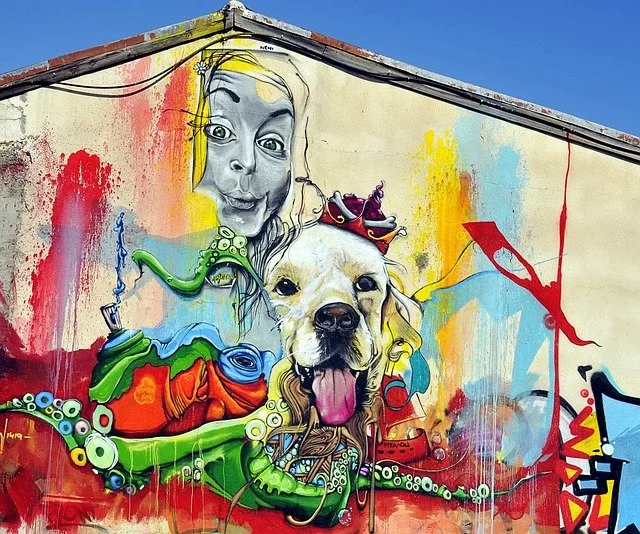
In recent years murals have gained new popularity in India, especially in urban areas. Street artists and community groups use murals to add colour and beauty to drab city walls, and also to make strong social and political statements.
Alongside its older mural tradition, India now has an active street art scene, with work that ranges from political pieces to playful, imaginative ones.
Murals are one of the most public forms of art. They bring colour and life to urban spaces, reflect the experiences and values of communities, and serve as powerful tools for activism and social change.
Frequently asked questions
What is a mural?
A painting or drawing created directly on a wall, a ceiling or another permanent surface.
How old is the tradition of murals?
Wall painting goes back tens of thousands of years. UNESCO dates the Chauvet cave paintings in France to roughly 30,000–32,000 years ago. Ancient Egyptian tomb paintings date to about 2000–1100 BCE, and India’s Ajanta caves have murals from the 2nd–1st centuries BCE and the 5th–6th centuries CE.
Where does the word mural come from?
From the Latin muralis, meaning “of a wall”, related to murus, which means wall.
Where can you see old murals in India?
In caves and temples, for example Ajanta and the Kailasa temple at Ellora, where paintings survive in places.
Why are murals important today?
They bring colour to public spaces, reflect the values of communities and work as powerful tools for activism and social change.
Sources and further reading
Decorated Cave of Pont d’Arc, known as Grotte Chauvet-Pont d’Arc, UNESCO World Heritage Centre.
Egyptian Wall Paintings in Gallery 132, The Metropolitan Museum of Art.
Ajanta Caves, UNESCO World Heritage Centre.
Ajanta Caves, Encyclopaedia Britannica.
Ellora Caves, UNESCO World Heritage Centre.
Related reading
- Krishna Art: The 16 Kalas and 13 Famous Artworks.
- Raja Ravi Varma: The Master of Indian Art
- Guernica by Pablo Picasso: History, Composition and Symbolism
Image credit: “Colorful mural of a dog and surreal face” by digihanger, via Pixabay, under the Pixabay Content Licence.